


A hallway console earns its place by keeping the entrance useful without crowding it. The best console table for hallway ideas start with a slim shape, a few thoughtfully chosen objects and storage for the things you need near the door. Keep the surface edited and the entrance can feel calmer.
A console can quickly become a landing place for keys, post and everyday essentials, but it needn’t turn into a catch-all. A mirror, a small tray and one or two decorative pieces create a welcoming focal point while keeping loose items contained.
This guide shows how to style a console without crowding it, choose a size that suits your hallway and decide whether baskets belong beneath the table or whether the piece would work better in another room. Use these practical ideas to bring beauty and order together, so your entrance feels considered, useful and personal.
Key Takeaways
- Choose baskets only when they give everyday essentials a tidy, accessible home; otherwise, keep the space beneath the table open.
- Build a composed display with a small selection of objects, varied heights and a tray to gather loose essentials.
- In a narrow hallway, favour a slim profile and decorations that add interest without projecting into the walkway.
- Use masking tape to mark the table’s footprint before choosing its position, and leave room for drawers to open fully.
- If the hallway doesn’t suit a console, consider how the same piece could serve in a living room or another space.
Do console tables need storage baskets?
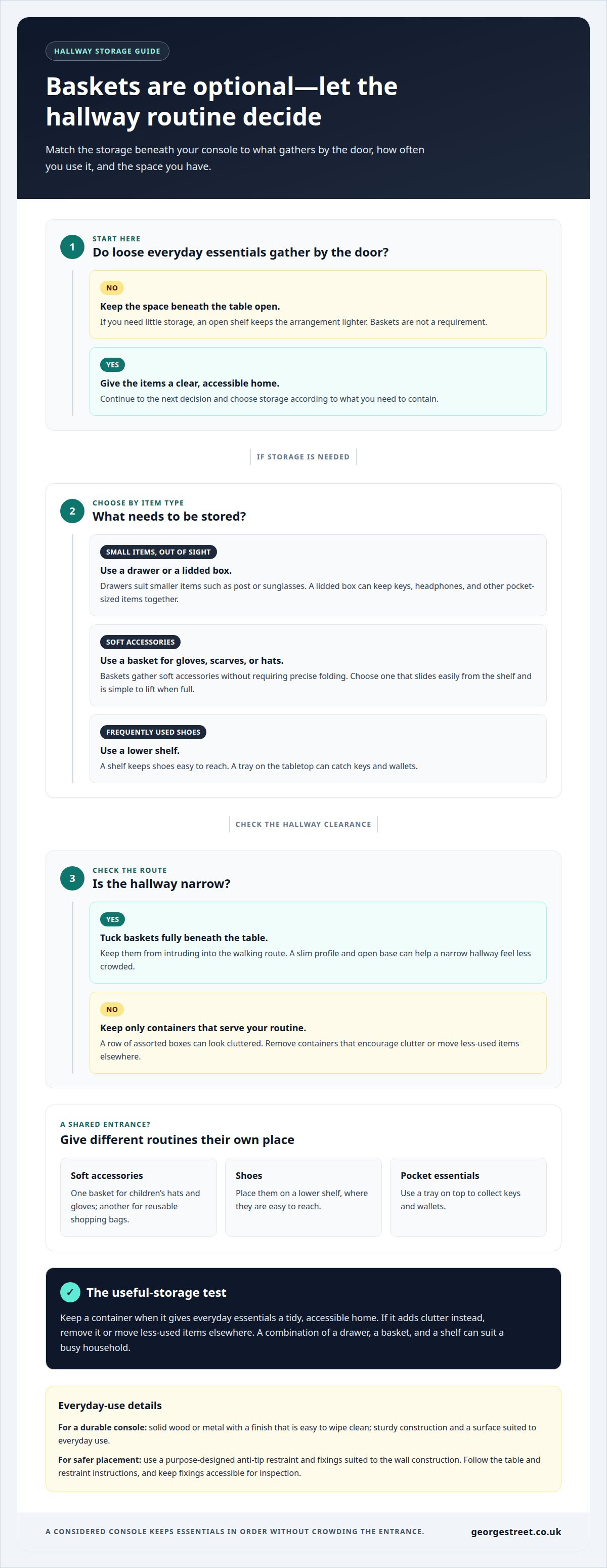
No. Baskets suit a hallway console when you need to contain loose essentials, but they’re optional. A lower shelf can hold shoes or a basket; an open shelf keeps the arrangement lighter when you need little storage.
Start with what gathers by the door. A small basket can collect gloves, scarves and hats, while a lidded box keeps keys, headphones and other pocket-sized items together. Use a drawer for post or sunglasses instead of letting them spread across the tabletop. This gives everyday items a clear place and leaves room for a lamp or vase.
In a shared entrance, assign containers to different routines. One basket can hold children’s hats and gloves; another can collect reusable shopping bags. Shoes fit on a lower shelf, while a tray on top catches keys and wallets. In a narrow hallway, tuck baskets fully beneath the table so they don’t intrude into the walking route.
Storage can also contribute to the room’s character. Woven baskets add natural texture beneath a painted or wooden table, while matching boxes create a quieter, more tailored look. Choose containers that slide easily from the shelf and are simple to lift when full. A row of assorted boxes can look as cluttered as the belongings it hides, so keep only those you use regularly.
Drawers work best for smaller items that benefit from being out of sight. Shelves make frequently used shoes easy to reach, and baskets gather soft accessories without requiring precise folding. A combination can suit a busy household: one drawer for keys and post, one basket for gloves, and a shelf for shoes. If you’re looking at hallway furniture, consider how each storage feature supports your routine, not just its appearance.
For a durable hallway console, consider solid wood or metal with a finish that’s easy to wipe clean. Sturdy construction and a surface suited to everyday use matter more than appearance alone.
To secure a console table safely, use a purpose-designed anti-tip restraint and fixings suited to the wall construction. Follow the table and restraint instructions, and keep the fixings accessible for inspection.
Treat baskets as part of a considered arrangement, not a requirement. A clear tabletop, a drawer for small essentials and one basket for scarves can make a hallway welcoming and orderly. If the storage encourages clutter, remove a container or move less-used items elsewhere.
How do I decorate a console table without cluttering it?
Begin with a focal point, then give each supporting object room to breathe. UK hallways can suit traditional, contemporary or mixed furniture styles; choose pieces that echo the home’s existing finishes and character.
Lamps, Mirrors, Flowers and Books
A mirror can brighten the display by reflecting light and creating a sense of space. Hang a mirror or picture three to four inches above the table, or use a round mirror to anchor a blank wall. Choose a frame that works with the console, such as a restrained modern mirror above an antique wooden table or a vintage frame with a sleek design.
For a balanced arrangement, group three to five main items and vary their heights. A lamp, a vase of flowers and a short stack of books make a useful starting trio. Add a tray for smaller objects, then leave clear space around the group. Two lamps create traditional symmetry, while one lamp beside a taller vase feels more relaxed.
Seasonal Styling and Table Styles
For summer, choose a few statement pieces instead of filling the surface with small ornaments. A sculptural vase, a favourite book and one framed photograph can make the table feel considered without looking busy. In spring, white ceramic vases filled with faux blossom or tulips bring colour while keeping the arrangement simple.
Mixing antique and contemporary pieces adds depth without crowding the arrangement. Place a modern lamp beside an older framed photograph, for example, then repeat one colour or material elsewhere. Rattan, ceramic, glass and foliage introduce contrasting textures; choose a few rather than displaying every finish at once. A runner and an amber glass vase can soften a sleek console.
Use this sequence to keep the composition deliberate:
- Choose one focal point, such as a round mirror or distinctive vase.
- Group a few objects in threes, varying their height and silhouette.
- Use a tray to bring smaller pieces together, then remove anything without a clear role.
View the table from the doorway as well as up close. If the mirror reflects clutter elsewhere, adjust its angle or simplify what it catches. A candle, plant and stacked books can add warmth, but give each enough space to remain visible. The result should feel personal, collected and not crowded.
Small console tables for narrow spaces
A slim console can bring purpose to a narrow hallway without making the route feel crowded. Choose a shallow profile and open base to keep more of the floor visible. A narrow top can still hold a key dish or small vase, while slender legs help the table sit lightly among existing furniture.
Start with the hallway’s fixed features. The front door, coat hooks and nearby doors affect where a table can sit comfortably. Placing one beneath a window can frame the view and create a useful surface. A table above a radiator may use an overlooked stretch of wall, provided it doesn’t obstruct the radiator or its controls.
For console table ideas in a narrow hallway, favour decorations that rise rather than spread. A tall vase or candlesticks draw the eye upwards, while bulky ornaments can project into the walkway. Keep the tabletop available for things you use as you leave, such as sunglasses or a small key dish.
Use a simple change in scale to give a compact surface a considered look:
- Place a tall vase at one end to add height without using much surface area.
- Set a medium-sized tray beside it to gather everyday essentials.
- Add one small accent, such as a candleholder, then leave the remaining top clear.
A tall, medium and small arrangement gives the display a clear rhythm without crowding it. Beneath a hallway window, choose a vase that doesn’t obscure the view. Against a blank wall, a narrow mirror can draw the eye upwards and reflect light into the entrance.
Shape matters as much as depth. A narrow rectangular design can follow a long wall, while a curved edge may soften a tight passage where people turn. Open legs can feel less imposing than a solid base. Use a lower shelf only if its contents stay tucked in; protruding shoes or baskets can obstruct the route.
These console table ideas for a narrow hallway work best when the piece has a clear purpose. A tray keeps small essentials together, while one decorative feature gives the entrance character. Match the finish to nearby details, such as a wooden door or painted skirting, instead of introducing several competing colours.
Before settling on a design, consider how people move through the entrance while carrying coats or shopping. If the table’s corners feel intrusive as you pass, choose a slimmer shape or another position. A well-chosen console can create a graceful focal point while leaving the everyday route open.
Choosing a table based on hallway layout and clearance
Map the doors, windows and walking route before choosing a table. Marking its footprint helps you decide whether a console, bench or narrow sideboard suits the entrance.
Layout and Clearance
Measure the wall and mark the intended table footprint on the floor with masking tape. Walk past the outline, open nearby doors and consider how people carry coats or shopping through the hall. If the table has drawers, allow them to open fully without blocking the route or hitting a door.
Then assess the wall itself. A console beneath a window can frame the view, while one above a radiator uses otherwise overlooked space. Make sure the table won’t obstruct either feature, and choose a smaller profile where the hallway narrows near a doorway or staircase.
Console Tables, Benches and Sideboards
A console table provides a display surface with a relatively light presence, making it useful for keys, a lamp or flowers. A hallway bench prioritises a seat for putting on shoes, while a narrow sideboard suits belongings that need concealed storage. Choose according to the routine the furniture must support and the available floor area.
For a cohesive finish, take colour cues from fixed details such as the front door, flooring or stair rail. A pale console can sit quietly against a light wall; a darker finish can echo black door hardware or a deep-toned bannister. Repeat one colour in a vase or frame rather than introducing several competing shades.
Flowers bring a gentle seasonal change without requiring new furniture. In spring, a white ceramic vase with faux blossom or tulips adds a fresh note; for another season, swap the stems and keep the vase. Choose a height that doesn’t crowd a mirror or obstruct a window, and leave clear space around it.
These practical considerations can help you decide whether a table belongs in the hallway or elsewhere. If the entrance needs a seat or substantial hidden storage, a bench or sideboard may serve better. If the living room has more space for a lamp, books and a considered display, the console could make a stylish feature there instead.
Console tables for hallways and other rooms
A console table can work beyond the entrance when its purpose suits the room. In a hallway, it can hold keys and post; in a living room, it can frame a wall, add light or display objects that matter to your household.
Think of the hallway as a working landing place. A shallow arrangement near the front door might pair a key dish with a framed photograph, leaving space for incoming post. A mirror above can reflect light, while a ceramic vase softens the practical feel. Here, the table helps make arrivals and departures more orderly.
In a living room, the console can become a focal point behind a sofa or against an open wall. At least one lamp is recommended on a living-room console to create an extra pool of diffused light. A framed print, a bowl and a small stack of books can support the lamp without competing with the room’s main seating arrangement. Keep the objects in balance with the furniture nearby.
A dining room console can serve a different purpose. Use its surface for serving pieces when guests gather, then display a ceramic bowl or framed artwork between meals. In a bedroom, it can hold a jewellery dish and a small lamp, provided these don’t obstruct drawers or the route around the bed. Let the room’s daily movement guide placement.
Consider these differences before moving a table from one room to another:
- Hallway: Keep keys and post accessible, and preserve space for the route through the entrance.
- Living room: Add a lamp for soft light, then select objects that relate to nearby seating.
- Dining room: Leave enough clear surface for serving, with display pieces easy to move.
- Bedroom: Choose a calm arrangement that supports bedside routines without obstructing circulation.
Changing rooms doesn’t mean replacing every object. A lamp and favourite framed picture can travel from the hallway to a living room, while a seasonal vase or bowl gives the new display a distinct note. For homes where entertaining extends outdoors, the scale of small aluminium pergolas or medium aluminium pergolas can help shape the wider setting. Understanding whether aluminium pergolas are waterproof is another consideration for planning that outdoor space.
Choose the room where the table solves the clearest need. If the hallway already has a useful place for keys and post, a living room may offer more scope to add light and create a composed display. Let each room’s purpose guide what stays on the table, so the piece feels at home wherever it stands.
George Street Furnishers
George Street Furnishers can help you consider furniture choices in the context of your home, from the hallway’s available space to the style and practical role a piece should serve. If your entrance needs a different solution, the same thinking can help you decide whether a console belongs elsewhere or whether another furniture choice better suits the room. Focus on the layout, the items you need close at hand and the look you want to carry through your home. A considered choice brings everyday usefulness and a sense of welcome into balance. For a closer conversation about your furniture needs, contact George Street Furnishers.
Make your hallway feel like home
Let the entrance reflect the way you live, rather than treating it as a display that must stay unchanged. As routines shift, the table can welcome a new detail: a framed photograph, a seasonal stem or a small dish for everyday essentials. The best ideas for a console table in your hallway leave room for change while keeping the space personal and composed.
If you’re considering furniture for more than one room, George Street Furnishers also offers sofas, aluminium pergolas, and beds and mattresses. Each can contribute to a connected home while serving its own purpose. Start with the space you’re ready to shape next, and consider what would make it more useful and welcoming.
Contact George Street Furnishers to discuss your furniture needs. A thoughtful choice can make coming home feel even more inviting.
Frequently Asked Questions
How do I know it’s going to fit in my home?
Compare the table’s full dimensions with the exact spot where you plan to place it. Account for details often missed, such as skirting boards, radiator pipes, door handles and nearby light switches. Check the route into the room too, especially if the table arrives assembled. A piece may fit against the wall but still make a doorway awkward or block something you use every day.
How do you make a console table look expensive?
Choose a well-proportioned table and make its finish work with existing details, such as a stair rail or door furniture. One substantial ornament can look more considered than several unrelated trinkets. Keep materials consistent or deliberately contrasting, such as a ceramic vessel against a timber surface. A clean tabletop and neatly arranged lamp cables also help the display feel composed.
How to style?
Decide what the table needs to do, then style around that purpose. In a working entrance, give post or keys a defined place before adding decorative objects. For a purely decorative setting, choose one eye-catching piece, then add details that repeat a colour or material elsewhere in the room. Step back from the doorway and remove anything that makes the arrangement feel unbalanced.
What is the ideal console table depth for a narrow hallway?
There isn’t one ideal depth for every narrow hallway. Choose the shallowest table that still serves its purpose, and assess it against the clear walking route, door movement and nearby furniture. A key dish needs less surface than a lamp or display. Measure how far the table can project from the wall, then consider whether it will remain practical with its usual objects in place.
How do I measure a hallway before buying a console table?
Measure the usable wall length, the distance from the wall to the opposite side of the passage, and the height available beneath a window. Note obstacles such as sockets, switches, skirting and radiator controls. Measure nearby doors when open and closed. Record the measurements together so you can compare the table’s width, depth and height with the space, rather than relying on appearance.
What are the best console tables for small hallways?
The best choice meets the hallway’s main need without dominating the route. An open-legged design can feel visually lighter, while a drawer suits essentials you’d rather keep out of sight. A curved front can help where people turn through a tight area. Match the table’s storage and shape to how the entrance works, not simply to the available wall space.