


The most beautiful display cabinet may still be the wrong one for your living room. A display cabinet for living room use should fit the space, suit the pieces you want to show and offer practical storage for items you’d rather keep out of sight.
It’s easy to focus on glass, finish or style first. But a cabinet that’s too tall, wide or deep can overwhelm the room, and crowded shelves can distract from the objects you want to highlight. The right choice feels like a natural part of the layout, with room for treasured pieces and useful storage behind closed doors.
This guide explains how to judge size and proportions, balance display space with concealed storage, and compare details before viewing or buying. You’ll also find practical advice on placement, lighting and caring for delicate objects. Start with a few clear priorities, and you can choose a piece that suits the room and gives meaningful belongings a place to be seen.
Key Takeaways
- Start with what you want to display and store, then choose a cabinet layout that balances visibility with useful concealed space.
- Choose a display cabinet for living room that suits the room’s proportions and works with the furniture around it.
- Measure the intended space and delivery route, and consider circulation, doors, windows and nearby seating before deciding where it will go.
- A thoughtful selection of objects, arranged with space between them, can help a display feel curated rather than cluttered.
- Before buying, compare the actual dimensions, finish, access and upkeep details, and confirm current availability.
What does a display cabinet add to a living room?
A display cabinet gives selected belongings a visible place in the room, while its design may also provide enclosed storage. It can bring personal history into view, from a much-loved keepsake to favourite books, and help the room feel more ordered when everyday items are tucked behind doors.
A display cabinet is a piece of furniture designed to present chosen objects while, depending on its layout, also storing belongings. Unlike general-purpose storage, it makes the things on view part of the room’s character, not just its organisation.
Its visual presence matters, too. A cabinet’s shape, material and position can become part of the room’s composition, whether it provides a quiet backdrop or draws the eye. The right display cabinet for living room use depends on what you own, the space available and how you use the room. Start with its purpose, not its appearance.
What do you want your display cabinet to hold?
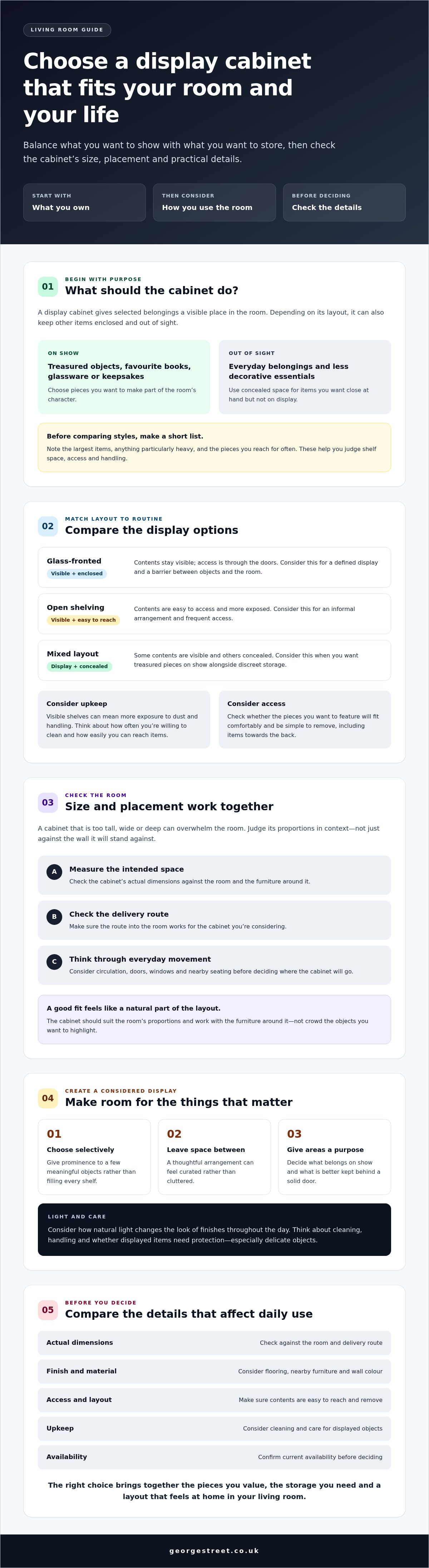
Before comparing cabinets, list what you’d like to house, such as treasured objects, books, glassware or keepsakes. Note the largest items, anything particularly heavy and the pieces you reach for often. These details help you assess shelf space, access and how easy the contents will be to handle.
Next, separate the pieces you want to see from the belongings you’d rather keep out of view. A few meaningful objects may deserve prominence; everyday odds and ends may be better stored elsewhere or behind a solid door. Editing your list now makes it easier to compare designs against what you actually need.
Display cabinet or closed storage: which role matters most?
Visible shelves make objects part of the room, but they also leave them more exposed to dust and handling. Enclosed storage keeps belongings less visible and creates a more contained presentation. Neither approach suits every home. Consider how often you’re willing to clean the cabinet and whether displayed items need protection.
If you need both functions, look for a balance between visible shelves and concealed space. Decide what belongs on show and what should be close at hand but out of sight. Giving each area a clear purpose can help the cabinet support your routine without turning every shelf into a display.
Which display cabinet style and layout suits your living room?
Choose a layout by picturing how you’ll use the cabinet, then consider how it will sit among the furniture and architectural details already in the room. A glass-fronted cabinet puts selected pieces in view; open shelves make them easy to reach but leave them more exposed. A mixed design can give keepsakes a place alongside closed storage for less decorative essentials. The best layout is the one that suits both your belongings and your routine.
Glass-fronted, open or mixed display cabinet?
Look beyond appearance. Glass doors create a visible boundary around displayed objects, while open shelving offers direct access and a more informal feel. Both need some upkeep, so consider how easily you can clean the shelves and reach items towards the back. Check that the objects you want to feature will fit comfortably and be simple to remove.
A mixed layout may suit you if you want treasured pieces on show but prefer everyday belongings out of sight. Compare the options using practical needs as well as style.
| Layout | Visibility and access | Consider if you want |
|---|---|---|
| Glass-fronted | Contents stay visible; access is through the doors | A defined display and a barrier between objects and the room |
| Open shelving | Contents are visible and easy to reach | An informal arrangement and frequent access |
| Mixed | Some contents are visible, others concealed | Display space alongside more discreet storage |
How should the cabinet's material and finish relate to your room?
Materials and finishes shape the mood as much as the cabinet’s outline. Wood can bring warmth and visible texture; glass or smoother surfaces may feel lighter or create contrast. These are general design considerations, not specifications of any particular range. Consider how a finish will work with the tones and textures already in the room rather than judging it on its own.
Look at the flooring, nearby furniture and wall colour together. A contrasting finish can make the cabinet a focal point, while a closer match may help it blend in. Natural light can change how colours and surfaces appear throughout the day, so consider the cabinet in the room’s different lighting. Let the architecture and your personal taste guide the decision.
How do you choose the right display cabinet size and placement?
A cabinet can seem suitable for a wall on paper and still feel awkward once it’s in the room. Check the available space, how you move around it and whether its height feels balanced beside nearby furniture. A well-placed display cabinet for living room use should feel considered, not like an obstacle or an afterthought.
What should you measure before choosing a display cabinet?
Measure in this order and write down the results so you can compare them with the cabinet’s stated dimensions:
- Map the position. Measure the usable width, height and depth, accounting for skirting boards, radiators and other features that may limit placement.
- Check nearby movement. Note how doors open and whether the cabinet would narrow a regular route through the room.
- Compare the cabinet dimensions. Check its full height and depth, not just its footprint. Consider how it will look alongside seating and other furnishings.
- Trace the delivery route. Measure entrances, hallways and stairways, including tight turns and restricted clearances. Check any access guidance provided for the item before deciding.
Measure both the intended position and the route into the room. The first check confirms that the cabinet can fit where you plan to put it; the second helps you assess whether it can reach that spot. If the route includes a narrow turn, compare the available clearance with the product’s delivery guidance instead of relying on the cabinet’s width alone.
Where should a display cabinet sit in the living room?
Look at the room from the places you use most, especially the sofa. A cabinet may work well where its contents can be seen from the seating area, as long as it doesn’t block a doorway, interrupt a walkway or make the space around a chair feel tight. Keep its visual weight in balance with nearby pieces, and leave enough room to approach it and open its doors comfortably.
Light deserves attention. Natural light can make displayed objects easier to see, but a bright window opposite glass or a reflective finish may create glare at certain times of day. Notice how the light shifts before choosing a position, and make sure curtains and doors can move freely.
Compare the cabinet’s height and scale with the wall, seating and other furnishings. A tall cabinet may draw the eye upwards; a broader one can feel more prominent across the wall. Aim for a position where it’s comfortable to view, easy to reach and visually connected to the room, without crowding the route through it.
Will a display cabinet make your living room feel cluttered?
Not necessarily. A display cabinet can bring treasured pieces into view without overwhelming the room, provided its scale and contents are considered. Visual clutter often comes from trying to show too much at once. Crowded shelves compete for attention, while an edited arrangement gives meaningful objects space to be noticed.
Editing your display can restore visual calm without hiding the pieces that matter. Choose a few objects with a shared thread, such as similar colours, materials or personal meaning, rather than filling every shelf. Leave clear space around them so each group has room to breathe. This helps the cabinet feel like part of the living room, rather than a collection of unrelated items behind glass.
How can you arrange objects without overcrowding the shelves?
Begin with the pieces you most want to see, then build a simple arrangement around them. Group keepsakes from a shared occasion or pair objects with a similar finish. Varying heights can add interest, but avoid letting one tall piece obscure another. Keep fragile objects away from edges and place heavier belongings on shelves suited to their weight, checking the cabinet’s product information for any stated limits.
Step back and view the arrangement from your usual seat. If every object catches your eye at once, remove a few or regroup them. You can rotate displayed pieces over time to refresh the arrangement without adding more. A thoughtful display cabinet for living room use can showcase a considered selection while keeping less decorative belongings out of sight.
How do lighting and upkeep affect a display?
Light changes the mood of a display. Daylight can bring out colour and detail, while glare on glass or reflective surfaces may make objects harder to see from certain angles. Check the cabinet in the room at different times of day. Don’t assume it includes built-in lighting; confirm any features in the product details before buying.
Consider maintenance, too. Glass, open shelves and displayed objects may need regular dusting, so think about whether you can reach each shelf comfortably and clean around the pieces. A smaller, manageable selection can be easier to care for and more restful to look at.
How to make a confident display cabinet choice
A confident choice comes from matching the cabinet to your room and routine, then checking the details rather than relying on appearance alone. Before deciding, be clear about what you want it to do, where it will stand and what you’ll put inside. These priorities make it easier to compare options fairly.
What should you check before buying a display cabinet?
Use this checklist to review a listing alongside your measurements. If a detail isn’t provided, ask the retailer to clarify it before you commit. Product details and current availability can vary, so confirm both for the specific item you’re considering.
- Purpose: Decide what you want to display and what you need to store out of sight.
- Dimensions: Check the cabinet’s height, width and depth against the intended position, including space around it.
- Layout: Review the shelf arrangement, access and balance between visible display and concealed storage.
- Materials and finish: Read the listing carefully and consider how they’ll sit with nearby furniture, flooring and wall colour.
- Access: Recheck entrances, hallways and stairways on the route into the room, as well as the final position.
- Upkeep: Look for care guidance and consider whether you can reach the shelves and clean the surfaces comfortably.
If an important measurement or feature is unclear, pause before buying a display cabinet for living room use. A quick question can clarify what the listing confirms and what you still need to consider.
Where can you explore furniture options?
Once you’ve set your requirements, browsing a broader furniture selection can help you picture how a potential piece might sit alongside the rest of your room. George Street Furnishers sells furniture through its website and has a showroom where you can view furniture in person. Confirm whether a particular item is available before making a special trip or purchase.
Take your measurements and checklist as you explore. A piece should feel right in proportion, purpose and presence, with enough room for the stories you want to bring into view. Explore the furniture range to consider options for your home.
Choose a cabinet that feels at home
The right display cabinet for living room use starts with a clear purpose: what you want to show, what you need to store and how the piece will fit your daily routine. Measure the intended position and the route into the room, then compare the cabinet’s layout, materials, care guidance and confirmed availability before deciding.
Keep the display intentional. A few meaningful objects, thoughtfully arranged with space around them, can bring warmth and personality without making the room feel crowded. Check that the cabinet’s scale sits comfortably alongside your existing furniture and that its position leaves everyday routes clear.
When you’re ready to explore, browse the furniture range from George Street Furnishers, a third-generation family-run business with more than 75 years of experience. Its website offers furniture and home goods, with delivery across the UK. Explore the furniture range and take the next step towards a living room that feels truly yours.
Frequently Asked Questions
What should I look for in a display cabinet for a living room?
Start with what you want the cabinet to display and store, then compare its dimensions and layout with your room. Consider whether you prefer open shelves, glass-fronted display or a combination with concealed storage. Check the listed materials, shelf arrangement, care guidance and any stated weight limits. Before deciding, confirm current availability and ask the retailer to clarify details that aren’t included in the product information.
How do I choose the right size display cabinet?
Measure the available width, height and depth where you plan to place it, allowing for skirting boards, nearby doors and other obstructions. Compare those figures with the cabinet’s full dimensions, then consider how its height and visual scale relate to nearby furniture. Measure the route through entrances, hallways and stairways as well. A cabinet needs to fit its intended position and be able to reach it.
Are glass display cabinets a good choice for living rooms?
They can be a good choice if you want selected objects to remain visible within a defined space. Glass-fronted shelves may help keep displayed pieces separate from everyday handling, but don’t assume they’re dust-proof. Consider cleaning access and how natural light might cause reflections or glare. If you’d rather conceal some belongings, compare glass-fronted designs with mixed layouts that also include closed storage.
How can I style a display cabinet without making it look cluttered?
Choose a small selection of objects with something in common, such as colour, material or personal meaning. Leave open space around each group instead of filling every shelf, and vary object heights to create a considered arrangement. Keep heavier pieces on shelves suited to their weight and fragile items away from edges. Step back and view the cabinet from your usual seat; remove or rearrange anything that feels crowded.
Where should a display cabinet go in a living room?
Choose a position where the cabinet can be seen from the seating area without blocking a doorway or narrowing a regular walking route. Check that doors and windows can open freely and that the piece won’t crowd nearby chairs or sofas. Natural light can brighten displayed objects, but may also create glare on glass or reflective finishes. Look at the position at different times of day before settling on it.
What is the difference between a display cabinet and a bookcase?
A display cabinet is primarily intended to showcase selected objects, often on visible shelves behind glass, though designs can also include concealed storage. A bookcase is generally arranged for storing and accessing books, commonly with open shelves. The distinction isn’t absolute: books can be displayed in a cabinet, and decorative pieces can sit on a bookcase. Choose according to what you want to store, see and reach most often.
Can a display cabinet work in a small living room?
Yes, if its footprint and visual presence suit the space. Measure carefully, check that it won’t interrupt movement, and consider a design that uses the available wall area without crowding nearby furniture. A restrained display can help the cabinet feel intentional rather than busy. Before choosing, compare the cabinet’s actual dimensions with the room and measure the route it must take to reach its position.