


Industrial character should never come at the cost of feeling at home. Steel, weathered-looking wood and exposed brick have plenty of appeal, but dark metal or bulky furniture can leave a living room feeling cold, crowded or unfinished. The key is balance. Thoughtfully chosen industrial style living room furniture can bring texture and character to a space while keeping it comfortable enough to settle into every day.
This guide explains the materials, finishes and shapes that give industrial style its distinctive look, and how to combine them with comfort and practical proportions. You’ll find ideas for pairing metal with warm wood, softening neutral colours with tactile fabrics and choosing furniture that suits your room rather than overwhelming it. With a considered mix of materials and a few personal touches, you can create a living room with an honest, distinctive spirit and room for everyday life.
Key Takeaways
- Recognise industrial style through practical materials and utilitarian forms, without recreating a factory setting.
- Repeat a small selection of finishes to create cohesion, using wood to soften the visual weight of dark metal.
- Choose sofas, occasional furniture and storage according to their function and visual presence, then let one piece take the lead.
- Plan your room in sequence: assess the space, choose a focal point, settle on finishes and add softer layers.
- Use industrial style living room furniture in proportions that suit the room, keeping walkways clear and the layout easy to live with.
What Defines Industrial Style Living Room Furniture?
Industrial interiors take their cues from practical materials and utilitarian forms. Their appeal comes from the contrast between structure and texture: metal, wood and pared-back finishes that show how a piece is made rather than disguising it. In a living room, that could mean a clean-lined sofa beside a wood-topped table with metal details, or simple storage that lets its materials take centre stage.
You don’t need a warehouse, exposed brick or a renovation to create the look. Industrial style is a set of design choices, not a demand to recreate a factory. Dark metal accents, visible wood grain and straightforward silhouettes can give a room an industrial feel while leaving it comfortable and suited to everyday use. Start with the room’s proportions and routines, then choose details that work with both.
Industrial and rustic styles can share weathered-looking wood, tactile surfaces and an appreciation for natural character, but they aren’t interchangeable. Rustic interiors often lean into country-inspired warmth and softer, more traditional forms. Industrial styling puts more emphasis on function, clean outlines and contrast between harder materials. The overlap can be useful: wood brings warmth to an industrial scheme, while a restrained metal detail can give a rustic room a sharper edge.
Which materials and details create an industrial look?
Metal introduces a crisp, utilitarian note. A dark frame, slender legs or simple hardware can suggest workshop-inspired structure without making every item feel heavy. Repeat a finish in a few considered places, such as a table base and a lamp detail, to make those accents feel connected rather than scattered.
Wood provides the counterpoint. Its grain and natural variation soften metal’s sharper appearance, adding depth and a relaxed quality to the room. Look for a balance of surfaces rather than trying to match every finish exactly. An exposed-looking frame or visible join can also hint at the style’s structural roots. Treat this as a visual influence, not a reason to strip walls or undertake building work.
That practical approach can guide furniture choices, too. Living room furniture with purposeful shapes and a thoughtful mix of materials can help express the style while keeping the room tailored to how you live.
How does industrial style feel welcoming?
Industrial doesn’t mean bare, severe or uncomfortable. A living room still needs inviting places to sit, familiar objects and textures that feel good in daily life. Upholstered seating, cushions and a rug can soften harder lines, while warm-toned lighting can make metal and neutral colours feel less stark in the evening.
Let contrast do the work. A simple metal detail can sit beside soft fabric; an uncluttered surface can be balanced by a tactile throw. These layers don’t dilute the style. They make it feel lived in, giving stronger materials room to stand out without dominating.
Industrial style pairs practical forms and honest materials with enough warmth and softness to make a room feel like home. Keep that thought in mind as you choose industrial style living room furniture: character comes from the composition, not from filling the space with heavy pieces.
How to Balance Metal, Wood and Softness in an Industrial Living Room
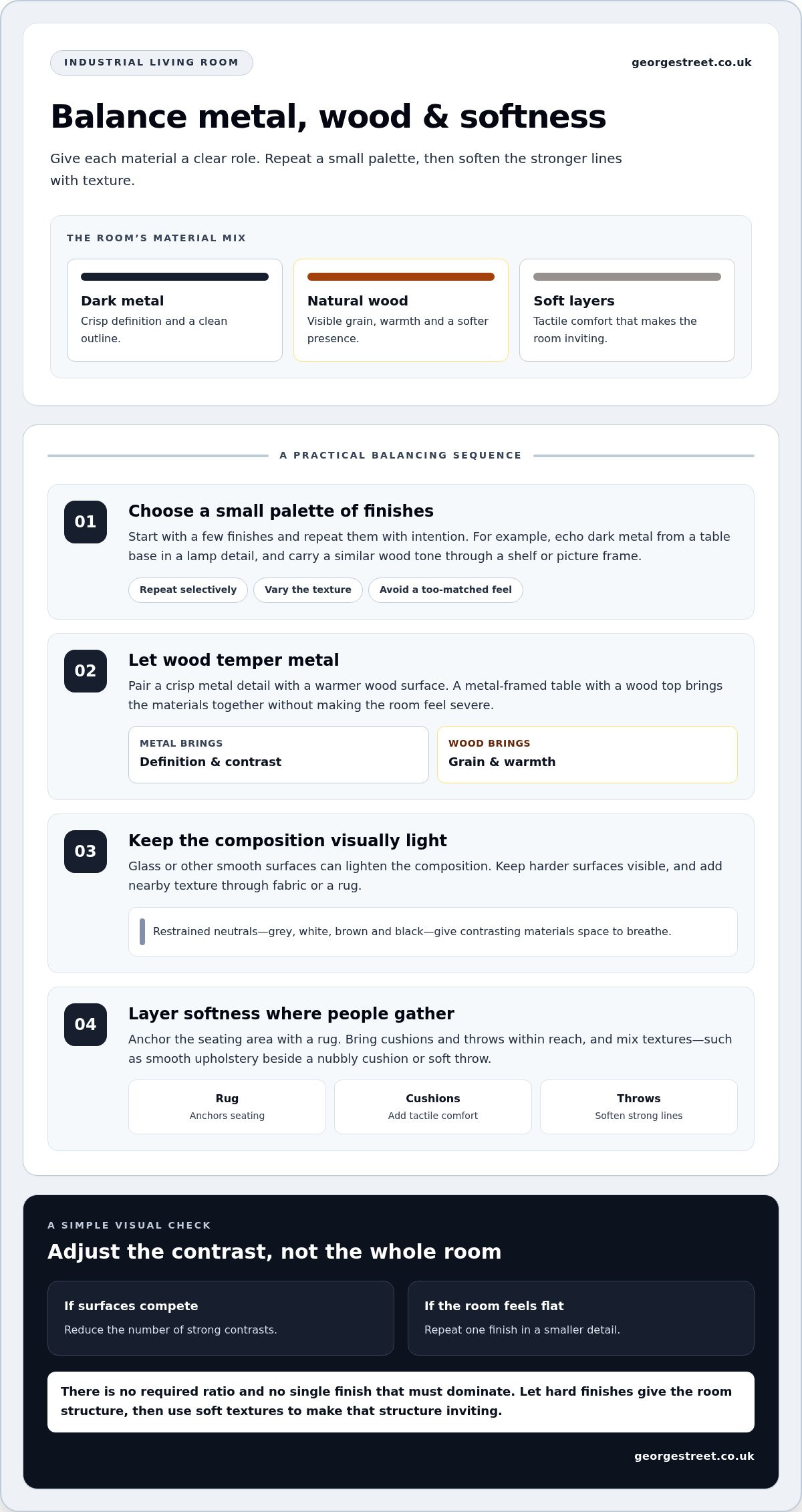
A balanced industrial scheme depends less on collecting dramatic materials and more on giving each one a clear role. Choose a small palette of finishes, then repeat them with intention. For example, dark metal on a table base might echo a lamp detail, while a similar wood tone appears on a shelf and a picture frame. Repetition creates a quiet thread through the room; variation in texture keeps it from feeling too matched.
How should wood and metal work together?
Wood and metal bring different qualities. Cooler metal finishes, particularly dark ones, create definition and a crisp outline. Warm wood adds visible grain and a softer, more organic presence. Used together, they temper one another: a metal-framed table with a wood surface feels purposeful without becoming severe.
Repeat each finish selectively rather than applying it to every piece. If a substantial item already has dark metal details, echo that finish in a smaller accent and let wood carry through another part of the room. There’s no required ratio and no single finish that must dominate. Step back and notice where the eye lands. If every surface competes, reduce the number of strong contrasts. If the room feels flat, repeat one finish in a smaller detail.
- Dark metal: brings crisp definition; balance it with a warmer wood surface or upholstered seating.
- Natural wood: adds grain and warmth; pair it with a simple metal accent to retain an industrial edge.
- Glass or smooth surfaces: can keep a composition feeling visually light; add texture nearby through fabric or a rug.
Which colours and textures soften industrial furniture?
Restrained neutrals give contrasting materials space to breathe. Grey, white, brown and black can form a calm backdrop, with small shifts in tone adding depth without crowding the colour scheme. A warm-neutral cushion or textured throw can soften a strong outline without disguising the furniture beneath it.
Layer softness where people gather. A rug can anchor the seating area, while cushions and throws bring tactile comfort within easy reach. Mix textures thoughtfully: smooth upholstery beside a nubbly cushion or soft throw creates contrast that feels welcoming, not overly decorative. Keep some harder surfaces visible so the character of the furniture remains part of the story.
Let hard finishes give the room its structure, then use soft textures to make that structure inviting. This principle helps industrial style living room furniture feel composed rather than cold. If you’re weighing up seating for your material palette, leather sofas can offer a considered contrast to wood and metal finishes.
Industrial Furniture Choices That Suit Your Living Room
Choose furniture by the job it needs to do, then consider how much visual attention it brings. A generously sized sofa may naturally become the room’s anchor, while a side table or storage piece can support the scheme without competing. This makes industrial style living room furniture feel deliberate: each item has a purpose, and the room has a clear centre of gravity.
How can a sofa anchor an industrial living room?
Start with how the sofa will be used. A room for stretching out and relaxing calls for a different shape and feel from one arranged mainly for conversation. Consider the available floor space, how people will move around the seating and whether the sofa’s outline will feel balanced beside other substantial pieces. Comfort matters as much as character; a striking silhouette shouldn’t make the room less inviting.
Upholstery also shapes the balance. Tactile fabric can soften visible metal or strong wood details, while leather adds a smooth, defined surface that sits naturally with industrial finishes. Explore leather sofas as one option, considering how their colour and texture will relate to the room’s other materials.
How should you choose tables and storage?
Occasional furniture works best when it supports the sofa rather than trying to rival it. A table can echo a finish already present in the room, while storage can keep everyday items close at hand. Prioritise what you need to store and leave comfortable routes through the space. A decorative piece that blocks movement or serves no practical role can make the layout feel crowded.
- Sofa: Ask whether its scale suits the room and its shape supports daily routines. Its contribution is comfort and, often, a natural focal point.
- Occasional table: Ask what needs to sit within reach. A repeated wood or metal detail can connect it to the wider scheme.
- Storage: Ask what you want to put away and where it will be useful. A considered position helps maintain clear circulation and a composed feel.
To keep the arrangement calm, give one piece the leading role. If the sofa has a strong profile or finish, choose simpler tables and storage around it. If the seating is visually quiet, an occasional piece can provide a measured point of interest. View the furniture as a group from the main entrance: notice which item catches your eye first, then adjust nearby shapes and finishes so they support rather than challenge it.
Leave breathing room around larger pieces, especially between the sofa, tables and doorways. The result should feel considered from across the room and easy to use up close. A good furniture choice earns its place through usefulness, comfort and character.
How to Make Industrial Style Work in Your Space
A successful scheme begins with the room you have, not an imagined warehouse interior. Notice the natural light, doorways, windows, alcoves and routes people use to cross the space. Take stock of existing furniture, too. A useful piece may already suit the palette or provide a calmer counterpoint to stronger industrial details, so there’s no need to replace everything at once.
Build the room in a clear sequence:
- Assess the room: note its shape, light and everyday uses.
- Choose a focal point: decide where you want the eye to settle, such as the main seating area.
- Select finishes: pick a small group of materials and repeat them with care.
- Add softer layers: bring in fabric, rugs and lighting to make the scheme feel lived in.
Scale matters as much as style. A large, visually solid piece can anchor a spacious room but may dominate a compact one. Before moving furniture, sketch a simple plan or use removable markers on the floor to test positions. Keep routes between entrances, seating and adjoining areas clear. A room feels more balanced when movement through it is easy.
How can you adapt industrial style to a smaller room?
In a compact space, choose fewer prominent pieces and give each one room to be seen. A lighter finish or an open-looking frame can help preserve a sense of visual space, though neither is a rule. Keep storage practical, using furniture that serves a real purpose, and avoid filling every corner with accents. Leaving some surfaces and floor visible can make the arrangement feel calmer.
Work with what’s already there. If an existing table or cabinet fits the palette, let it stay and introduce a complementary finish in a smaller detail. This gradual approach gives the room a coherent character without making it feel assembled all at once.
How can you style an open-plan living area?
In an open-plan room, use furniture placement to show where the living zone begins and ends. Position seating to face a focal point or create a conversational grouping, rather than pushing every piece against the walls. A rug can help define the area, while a floor or table lamp adds a pool of light that distinguishes it from neighbouring spaces.
Carry one or two chosen materials into nearby areas to create a sense of connection, but let the living zone retain its own identity through its furniture arrangement and layers. A repeated wood tone or metal accent may be enough. The aim is continuity, not exact matching.
Once you’ve mapped the room and decided what needs to stay, explore living room furniture options to shape a scheme around your space, routines and chosen finishes. Plan the placement first, then build the character around it.
Bring Industrial Style Living Room Furniture Together with George Street
A room comes together when its choices serve the way you live as well as the look you want. Start with practical needs, such as comfortable seating, useful storage and space to move. Then decide which piece will lead the arrangement, how its size relates to the room and which finishes can connect the remaining furniture. Industrial style living room furniture feels most natural when each decision supports the whole, rather than chasing a showroom-perfect result.
George Street Furnishers is a third-generation, family-run business with over 75 years of experience in furniture and home living. Its range includes sofas and other living-room furniture, with UK-wide delivery. You don’t need to buy a complete matching set: look for pieces that work together in scale, purpose and character.
What should you look for when choosing furniture?
Consider comfort first, then check that each piece suits the room’s proportions and everyday role. A sofa should invite you to sit; storage should make useful items easier to keep organised. Build consistency through a few repeated materials or finishes, not identical shapes. A wood detail might connect two different pieces, while a shared metal accent can give the room a quiet sense of unity.
Picture each item in place before deciding. Think about how it relates to the focal furniture, whether it leaves room to pass and what the view looks like from the doorway. These practical checks keep character from tipping into clutter.
How can you keep the finished room personal?
Leave space for objects that carry meaning: a favourite book, a piece collected on a trip or a photograph you enjoy seeing each day. Add texture through the things you genuinely use, such as a throw kept close to the sofa or a rug that makes the seating area feel settled. Personal details bring life to industrial materials without hiding their honest, purposeful quality.
Resist the urge to fill every surface. A considered room has pauses as well as points of interest. Let one or two distinctive items speak, and allow the rest of the furniture to support the rhythms of daily life. The result can feel cohesive without being overly styled, and characterful without losing the warmth that makes it yours.
As you refine your choices, return to the essentials: room needs, comfortable proportions, a clear material palette and details that feel personal. Explore living room furniture to find pieces for a distinctive space, then bring them together at your own pace. Industrial in character. Welcoming by design. A room that feels like home.
Begin Shaping a Room That Feels Like Yours
Your living room doesn’t need to be finished all at once. Choose one piece that answers a real need, then let its shape, material and place in the room guide what comes next. This gives industrial style living room furniture space to feel personal, rather than following a formula. Keep what already works, make room for comfort and allow meaningful details to gather naturally over time.
A distinctive room is built through thoughtful choices, not a perfect set. Consider how you use the space each day, and let character sit alongside ease. Explore furniture for a characterful living room and take the next step towards a space that feels welcoming, considered and unmistakably yours.
Frequently Asked Questions
Is industrial style still popular for living rooms?
Yes, industrial style remains a popular choice because it can be adapted rather than followed as a strict formula. A polished interpretation might use clean-lined furniture and a few structural details, while a relaxed version can include softer fabrics and collected objects. This flexibility lets the look evolve with your tastes. Instead of chasing a trend, choose materials and shapes you’ll enjoy living with over time.
Can industrial style work in a small living room?
Yes, industrial style can suit a small living room if you choose pieces with care. Note the room’s awkward corners, window positions and door swings, then consider how each item will fit into the routes through the space. A slim side table can provide a useful surface without taking up as much visual space as a large coffee table. Keep only the storage you’ll genuinely use.
How do you make industrial furniture feel cosy?
Make industrial furniture feel cosy by creating inviting moments around it, rather than treating every surface as part of a display. Place a reading lamp near the seat you use most, keep a favourite blanket within reach and add a few cushions in fabrics that feel pleasant. Personal books or a framed photograph can also soften the room’s mood and make it feel distinctly lived in.
What colours go with industrial style living room furniture?
Industrial style living room furniture works well with grounded colours such as charcoal, warm white, brown and grey. To give the scheme a personal note, introduce a muted accent, perhaps olive green, rust or deep blue, through a cushion, artwork or small accessory. Repeat that colour once elsewhere for a sense of connection. Keeping larger surfaces quieter helps a distinctive accent feel considered, not distracting.
Can you mix industrial furniture with other interior styles?
Yes, industrial furniture can sit comfortably alongside other styles if you identify a shared quality, such as simple shapes, natural materials or an appreciation for useful design. A contemporary room can take a single sturdy wood-and-metal piece, while a softer, traditional space might use an industrial table as a contrast. Begin with one crossover item, then add another only if the combination feels balanced.
Does industrial style have to include exposed brick or metal?
No, neither exposed brick nor visible metal is essential. You can suggest an industrial influence through purposeful furniture shapes, a restrained finish or details that reveal how an item is constructed. In a rented home or a room with smooth walls, a simple table or cabinet with a workshop-inspired silhouette may be enough. Keep the reference subtle and let the room’s existing architecture remain as it is.
How do you choose a sofa for an industrial-style living room?
Choose a sofa around the room’s routine first: consider who uses it, how they sit and whether it needs to support lounging, conversation or both. Check that its overall shape leaves comfortable space around nearby furniture, then think about how the upholstery will sit beside your other finishes. Tactile fabric can soften a sharper scheme, while a more defined surface can reinforce its character. Make comfort a priority when choosing.