


The most convincing mid-century room may be the one that doesn’t look like a time capsule. Mid-century modern furniture UK shoppers explore can bring warmth, clarity and character to a home, but choosing well means looking beyond a matching set of retro-inspired pieces.
If you’re unsure what defines the style, or worry it could overwhelm a smaller room or feel uncomfortable in daily life, focus on the balance at its heart: clean lines, considered shapes and practical design. The aim is to make a space feel personal, not staged.
This guide covers the design principles, materials and shapes associated with mid-century modern furniture, then explains how to choose pieces for your rooms and routines. You’ll find practical checks for scale, comfort, finishes and product details, whether you’re exploring original vintage furniture or newer designs influenced by the style. You don’t need to recreate a room from another era. You need pieces that feel at home in yours.
Key Takeaways
- Recognise the design principles behind mid-century modern furniture, and distinguish the style from a roomful of period-inspired pieces.
- See how materials, silhouettes and finishes shape a piece’s character, then decide which details suit your taste.
- Explore how mid-century modern furniture UK can work in your home by weighing visual appeal against room scale, comfort and everyday use.
- Use a room-by-room process to clarify your needs, measure carefully and compare furniture options with confidence.
- Know what to check when exploring furniture retailers, including product descriptions, dimensions, materials, care guidance and delivery information.
What Is Mid-Century Modern Furniture, and What Makes It Distinctive?
Mid-century modern furniture pairs purposeful forms with everyday function. Its simplicity and considered proportions help a room feel composed rather than crowded. The style is commonly associated with the period from the mid-1940s to the late 1960s, but its influence continues. You don’t need to recreate a room from that era. Use its principles to guide a few choices in a home that feels entirely your own.
That distinction matters when browsing mid-century modern furniture UK options. A piece can look old without reflecting mid-century design, while a newly made piece can borrow its ideas. Look at how its shape, details and function work together, not just the decade or style printed on a product label.
Which design features help identify mid-century modern furniture?
Look for clear outlines, restrained decoration and balanced proportions. The form is often allowed to speak for itself, with details kept purposeful rather than added for ornament. Tapered legs, or legs that lift a piece visibly from the floor, can create a lighter impression and leave more of the room in view.
One feature alone proves little. Elevated legs, for example, appear in many styles. Consider the whole piece: its silhouette, construction, detailing and practical purpose. Mid-century design brings these qualities together so furniture feels visually composed and suited to everyday living.
Is mid-century modern the same as retro or vintage furniture?
Not quite. Vintage describes an older item, while retro usually refers to a newer design that borrows the look of an earlier period. Mid-century modern refers to a design movement and the ideas associated with it, including its influence on furniture made today.
It also differs from industrial furniture, which often makes utilitarian materials and structural details more prominent, and from contemporary furniture, a broad label for current design that can take many forms. Styles can overlap, so use these cues as a guide rather than rigid rules. Assess the overall design and how it would work in your room instead of relying on a seller’s label alone.
To explore general furniture options, browse George Street Furnishers’ furniture page. Check individual product descriptions to see which pieces suit the style and your needs.
Materials, Shapes, and Details That Give the Style Its Character
A piece’s character comes from the way its outline, material, finish and upholstery work together. A streamlined shape may feel warm and inviting in a wood-toned finish, while a simpler form in a smoother surface can read as crisp and restrained. The balance matters more than any one detail. Teak and walnut are woods associated with mid-century design, but a warm wood appearance alone doesn’t confirm what a piece is made from.
Mid-century modern furniture UK shoppers find may include vintage originals and contemporary interpretations. A newer piece can borrow familiar design cues without being vintage, so check the description for its actual materials, finish and construction. Care instructions matter too: don’t assume similar-looking surfaces need the same treatment. These details help you assess a piece beyond its styling or label.
How do wood, upholstery, and finishes shape the look?
Wood tones can bring visual warmth, fabric upholstery can add texture, and smoother finishes can create a cleaner impression. These are differences in appearance, not a ranking of durability. Check each item’s details for material composition, finish and care requirements, and ask for clarification if anything is unclear. This helps you compare the item itself rather than relying on a broad style label.
What furniture shapes are associated with mid-century modern design?
Look for streamlined outlines and proportions that feel balanced rather than bulky. These cues can appear in sofas and armchairs, dining furniture and storage, though the exact form varies by piece. Don’t infer a designer or origin from a silhouette alone. Check the listed dimensions and construction details, then consider how the shape will sit alongside the other furniture in your room.
Visual cue | Question to ask
Warm wood tone | Does the description name the actual timber, veneer or other surface?
Textured upholstery | What is the fabric made from, and how should it be cared for?
Streamlined outline | Do the dimensions and proportions suit the space where it will go?
Smooth finish | Is the finish specified, and are its care needs explained?
Use these cues together rather than treating one feature as proof. Product descriptions and specifications help you judge what a piece is, beyond a broad label or photograph. To explore furniture categories, browse George Street Furnishers’ furniture, then check individual listings to see whether a piece fits the style and your requirements.
Will Mid-Century Modern Furniture Suit Your Home or Feel Too Retro?
It can suit your home without turning it into a period set. A carefully chosen chair, sofa or storage piece can introduce a mid-century note while the rest of the room reflects your own taste. The style’s appeal lies in visual clarity and character. A strongly coordinated look, however, may feel themed or simply not suit your preferences.
Start with what you already own. A warm-toned piece might sit comfortably with existing wood finishes, while a bold silhouette can become a focal point against calmer surroundings. Colour, lighting and soft furnishings help set the mood: a rug can ground the arrangement, gentle lighting can soften sharper outlines, and contemporary accents can keep the room from feeling tied to one era. You don’t need to recreate a historical interior to enjoy modernist design.
The style won’t suit every home or every taste. Consider whether the furniture works with your existing décor and supports the way you live. If a room feels busy, leave space around statement pieces and keep accessories selective. A restrained combination often feels more personal than a full matching scheme.
How can you mix mid-century modern pieces with furniture you already own?
Begin with one or two anchor pieces, then connect them to what’s already there through a shared colour, wood tone or upholstery texture. Leave visible space around the furniture and edit accessories rather than filling every surface. Before buying several coordinated items, sketch a layout or make a simple mood board using colours and shapes from the room. This helps you judge whether the mix feels balanced before committing.
How can room size and everyday use affect your choice?
Measure the intended footprint and the routes people use to move through the room, including space around doors and other furniture. A raised or visually light design can make a piece seem less imposing, but it doesn’t reduce its actual dimensions. Check those carefully. Then weigh appearance against daily needs: will the seating feel comfortable for the time you use it, and does the room need more storage?
When choosing a sofa, consider comfort and proportions together rather than letting style make the decision alone. Explore the retailer’s sofa range as one option, then check individual listings for dimensions and details. The right piece supports your routine and feels at ease in your home, not simply completes a look.
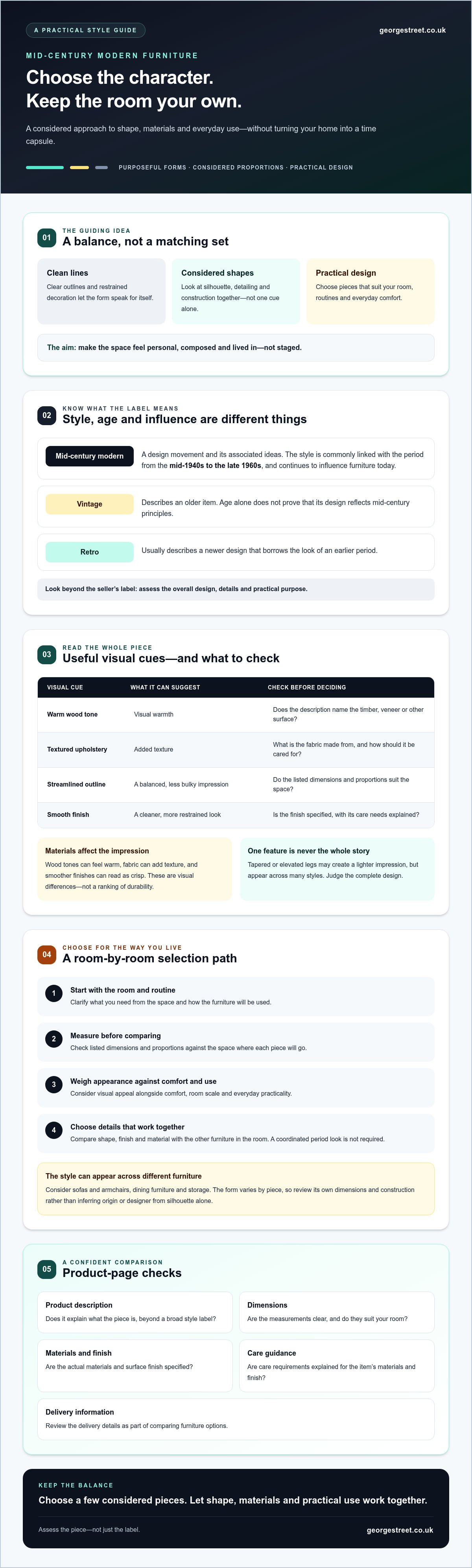
How to Choose Mid-Century Modern Furniture for Each Room
Choose for the room, not the label. This simple process helps you compare mid-century modern furniture UK options against the way you live, so a striking shape doesn’t come at the expense of comfort, access or useful storage.
- Define the room’s purpose. Decide what the furniture needs to make easier, from relaxing and hosting to sleeping or keeping essentials close at hand.
- Measure the space. Check the intended footprint, doorways and routes through the room. Allow room to move around the furniture and use it comfortably.
- Set your priorities. Choose what matters most: comfort, storage, ease of care, proportions or a particular visual quality. Put everyday needs ahead of decorative details.
- Compare options. Look at dimensions, finishes and construction information, and consider how each piece relates to your existing furniture.
- Check practical details. Review current product specifications, care guidance and delivery information before deciding.
What should you consider when choosing living-room furniture?
Begin with seating needs and the room’s layout. Think about who will use the space and how, then map out where a sofa or chair could sit without narrowing the routes people take through the room. Compare its proportions with the room and nearby furnishings. A visually light shape can still occupy more floor space than expected.
Comfort deserves equal attention. If possible, assess how the seat feels and whether its size suits your usual way of relaxing. To explore the retailer’s general furniture category, browse furniture for your home. Check individual product details to establish whether an item matches your style and needs.
How should you select dining and bedroom pieces?
For dining furniture, start with the table’s dimensions and how many people you need to seat regularly. Allow enough room to pull chairs back and move around the arrangement. Check the measurements for the complete setup, not just the table on its own.
In a bedroom, consider what needs storing, whether drawers or other storage can be accessed easily, and how the furniture will sit beside the bed. A balanced layout should leave practical space to move and reach bedside essentials. For both rooms, verify each item’s current specifications, finish, care guidance and delivery information before committing. Make the order of decisions count: purpose first, practical fit next, and appearance alongside both.
Where to Explore Mid-Century Modern Furniture in the UK
Finding a piece that suits your home takes more than recognising a familiar silhouette. Whether you’re searching for mid-century modern furniture UK retailers offer or considering a contemporary interpretation, assess the information behind the styling. Clear descriptions and practical details help you judge whether an item will fit your room and daily life.
What should you check before ordering furniture online?
Read the full product description, not just the title or text beside a styled photograph. Check the listed dimensions, materials and finish, then compare them with your own measurements. Consider doorways and access routes as well as the place where the furniture will sit. A photograph can suggest scale, but it can’t confirm it.
Before ordering, check the care guidance and the retailer’s current information about delivery, access, returns and availability. If a detail you need is missing or unclear, ask the retailer to clarify it before deciding. Keep a short checklist to hand:
- Do the dimensions suit the room and access route?
- Are the material and finish clearly identified?
- Is the care guidance suitable for your routine?
- Have you checked current delivery, returns and availability details?
These checks are useful for any furniture purchase, especially when choosing from a photograph or comparing pieces described with broad style terms.
How can George Street Furnishers help with your furniture search?
George Street Furnishers is a third-generation, family-run UK furniture retailer with over 75 years of experience. Its 80,000 sq ft showroom lets you explore furniture in person and consider scale, finish and comfort for yourself. The business also offers nationwide delivery across the UK. Check the details for the specific item you’re considering.
Explore the retailer’s general furniture offering and review individual listings to see which pieces suit a mid-century look. If you’re unsure about a product’s style or availability, contact the retailer to ask about that item before deciding.
To continue your search, explore the furniture collection and compare each item’s details with your needs.
Choose Pieces That Feel at Home in Your Story
The best mid-century modern furniture UK choice isn’t necessarily the most recognisably retro. Focus on the design details you enjoy, then make sure each piece suits your room’s proportions, comfort needs and everyday routines. A few considered choices can bring character without requiring you to remake your whole home.
Look beyond the style label: check materials, dimensions, care guidance and practical details before deciding. Whether you’re considering a single statement piece or furnishing a room, let function and personal taste lead. The result should feel like yours, not a set from another era.
George Street Furnishers is a third-generation, family-run business with over 75 years of experience, an 80,000 sq ft showroom and nationwide UK delivery. Explore its furniture selection and check current product details to find pieces that suit your home and the look you want.
Ready to take the next step? Explore furniture at George Street Furnishers, and find pieces that feel considered, comfortable and truly at home.
Frequently Asked Questions
What is mid-century modern furniture?
Mid-century modern furniture is a design approach that balances simple forms with practical everyday use. It’s commonly associated with the period from the mid-1940s to the late 1960s, and often features clean lines, restrained decoration and considered proportions. The style doesn’t require you to recreate a room from that era. You can bring its character into your home through individual pieces that work with your existing furniture and routines.
Is mid-century modern furniture still in style in 2026?
Yes, its design principles remain relevant in 2026, particularly if you value furniture that feels purposeful and visually uncluttered. The style can sit comfortably alongside contemporary pieces, without requiring a complete period-inspired scheme. Personal taste still matters: a strong silhouette or coordinated set may feel too dominant in some homes. Try a considered accent first and see how its shape and finish relate to your room before adding more.
How can I tell if furniture is genuinely mid-century modern?
Look at the whole design, not just one feature or the seller’s label. Clean lines, restrained ornament and balanced proportions may indicate mid-century influence, but tapered legs or a warm wood finish alone don’t prove a piece belongs to the movement. If you’re assessing a vintage original, check the item’s age, maker details and any available provenance. A contemporary piece may borrow the style without being vintage or an original from the period.
Can mid-century modern furniture work in a small room?
It can, provided the dimensions and layout suit the space. Some designs have elevated legs or open-looking forms that may feel visually lighter, but those details don’t make a piece physically smaller. Measure the furniture footprint, access routes and circulation space before buying. In a compact room, consider introducing one focal piece and leaving space around it rather than filling the room with coordinated furniture.
What colours go well with mid-century modern furniture?
Warm wood tones can pair with calm neutrals, earthy shades or carefully chosen richer accents. The right combination depends on your existing room: consider wall colour, flooring, natural light and upholstery together. A rug or cushions can introduce a contrasting colour without committing the whole space to it. Gather colour samples or make a simple mood board so you can judge the palette as a whole before choosing furniture.
What should I check before buying mid-century modern furniture in the UK?
Mid-century modern furniture UK shoppers should check the full product description, dimensions, listed materials, finish and care guidance. Compare measurements with your room and access routes, and review the retailer’s current delivery, returns and availability information before ordering. If you’re considering an original, ask what information is available about its age and provenance. George Street Furnishers offers a general furniture selection, so check specific items directly to see whether they suit your needs.