


The most inviting modern farmhouse living room ideas balance warm neutrals, natural textures and contemporary comfort, with vintage details adding character. A well-sized rug anchors the seating area: aim to have the front legs of each seat resting on it. The result feels layered and welcoming, rather than assembled from a single style.
It’s easy to see why farmhouse rooms appeal: they feel relaxed, familiar and suited to everyday life. The key is to bring that character together with clean-lined furniture and thoughtful finishing touches, so the room feels personal rather than overly rustic.
Explore how mirrors and lighting can shift the mood, how painted wood, exposed brick and soft colour add depth, and how vintage pieces can sit naturally beside contemporary furniture. You’ll also find practical guidance on choosing a rug to bring the seating area together.
Key Takeaways
- Use a mirror or distinctive light fitting to introduce a contemporary note while keeping natural textures in the mix.
- Build a calm palette with warm neutrals, then bring character through painted wood, brick or a gentle accent colour.
- Pair vintage finds with cleaner-lined furniture so the room feels collected and personal, not tied to one era.
- Choose a rug that suits the room’s feel, and use its placement to help anchor the seating area.
- Let comfort and everyday function guide furniture choices, with soft upholstery and welcoming seating at the heart of the room.
Using modern mirrors or lighting to shift the style
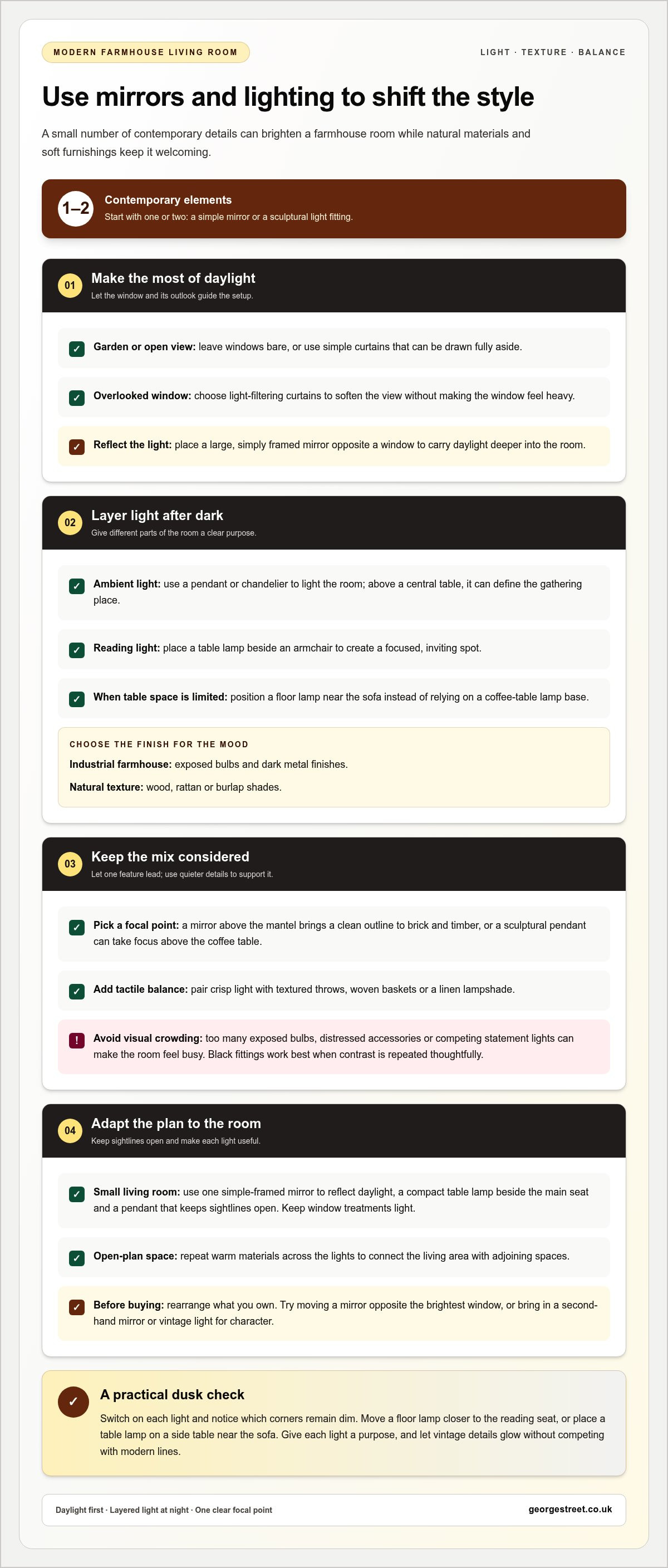
A modern farmhouse room can feel brighter and more personal with just one or two contemporary elements. A broad, simple mirror above a mantel, for example, brings a cleaner outline to traditional brick and timber. Or make a sculptural pendant the modern focal point above the coffee table. Pair either choice with textured throws, woven baskets or a linen lampshade, balancing crisp light with tactile comfort.
Start with daylight. If the windows face a garden or open view, leave them bare or use simple curtains that can be drawn fully aside. This keeps the window frame visible and lets natural light reach pale walls and wooden details. In a room overlooked by neighbours, choose light-filtering curtains instead; they soften the view without making the window feel heavy. A large mirror opposite a window can reflect daylight deeper into the room.
At night, layer lighting with separate sources for different moments. A pendant or chandelier provides ambient light, while a table lamp beside an armchair gives focused light for reading. Add a floor lamp near a sofa if there’s little room for a lamp base on the coffee table. Exposed bulbs and dark metal finishes suggest an industrial farmhouse mood, while wood, rattan or burlap shades add natural texture.
For affordable modern farmhouse living room ideas in the UK, rearrange what you already own before buying anything: move a mirror opposite the brightest window, then add a lamp with a natural-material shade. A second-hand mirror or vintage light can also add character without making the whole room feel themed.
In a small living room, choose one mirror with a simple frame and position it to reflect daylight, rather than filling a wall with smaller pieces. Use a compact table lamp beside the main seat and a pendant that keeps sightlines open. Keep window treatments light so the room feels connected to the outdoors.
Avoid treating black fittings as an automatic shortcut to modern style; contrast works best when repeated thoughtfully. Too many exposed bulbs, distressed accessories or competing statement lights can make a room feel crowded. Choose one focal fixture, then let quieter lamps and soft furnishings support it.
Consider how you use the room before choosing a fitting. In a family seating area, a pendant above the central table can define the gathering place, while a shaded lamp makes a nearby reading chair inviting. In an open-plan room, consistent warm materials across the lights can connect the living space with adjoining areas.
For a practical edit, switch on each light at dusk and notice which corners remain dim. Move a floor lamp closer to the reading seat, or place a table lamp on a side table near the sofa. The change is small, but it gives each element a purpose and lets vintage details glow without competing with modern lines.
Painted wood, exposed brick and pastel colours
Colour sets a farmhouse room’s atmosphere before the furniture goes in. Start with warm white, beige or greige walls, then compare the shades with the room’s woodwork in daylight. An oaty undertone can soften a bright white ceiling, while muted taupe adds depth beside pale timber. These warm neutrals create a calm backdrop for seating, books and collected objects without making every surface look the same.
Exposed brick adds an earthy counterpoint to a restrained palette. If a fireplace wall already has brick, let its varied reds and browns provide the strongest colour, then repeat a muted shade in cushions or a small decorative detail. In a room without brick, reclaimed wood shiplap can introduce grain and a rustic line. Paint the boards for a quieter, more contemporary finish, or leave their natural texture visible against smooth walls.
For a gentle accent, picture a neutral living room with a dusty-blue sofa. Pale walls and natural wood remain the foundation, while the sofa becomes a focal point without overwhelming the room. Muted green, soft blush or another subdued pastel can work just as well in a cushion, painted side table or artwork. Keep larger surfaces quiet when the accent is vivid, so the eye has somewhere to rest.
Patterns add another layer, especially when their scale varies. In a room with plain walls, floral-print cushions can bring a vintage note, while plaid curtains add a familiar country reference. Distressed or vintage-inspired wallpaper can work on a single feature wall, such as the one behind the main seating. Pair one noticeable pattern with simpler surrounding textiles, rather than letting cushions, curtains and walls compete.
Consider the whole open-plan space before choosing a wall shade. In a living room that opens into dining and kitchen areas, carry one warm neutral between the zones. Then define the sitting area with painted wood or a pastel accent. A console can mark the transition between living and dining without interrupting the visual connection. Repeating the wall colour on ceiling trim or nearby woodwork makes the scheme feel deliberate.
For a practical test, hold a small piece of shiplap or a sample board beside the brick, flooring and main seating. You can make a wash effect with three-quarters paint and one-quarter water. Apply it to a discreet section first, so you can judge how the colour and wood grain work together. The same shade may feel cooler beside grey stone and warmer beside honey-toned timber.
For example, a room may feel stark beside exposed brick and dark furniture. Keep the brick visible, introduce warm white walls, then add a dusty pastel through one textile. This softens the contrast while preserving the brick’s character. In another room, busy floral wallpaper may compete with plaid curtains; replacing one pattern with a plain neutral lets the remaining print feel intentional.
Use the room’s existing features as your guide. If the ceiling has exposed beams, a quiet wall colour lets their shape stand out. If the ceiling is plain and the floor is pale, painted shiplap or a muted pastel can add depth. A considered mix of warm neutrals, natural texture and restrained pattern makes farmhouse character feel fresh, not staged.
Mixing vintage and contemporary pieces
A farmhouse interior feels most personal when old and new pieces each have room to stand out. Start with one vintage focal point, such as an antique vase, then set it against a clean-lined coffee table or simple contemporary sofa. The contrast defines the older object without making the whole room feel like a period display. Repeat a material, such as warm timber, to connect the different eras.
For example, a fireplace wall may feel bare, but a large antique painting could look too formal. Place the artwork in a fresh, minimalist frame and hang it above the mantel. Its age and patina remain visible, while the simpler border helps it sit comfortably beside modern furniture. A small vase or vintage book on the hearth can echo the artwork without crowding it.
Personal collections add another layer of meaning. Group a few objects with something in common, such as family photographs, old books or pottery, on one shelf or side table. Give each piece breathing space: a deliberate display reads more clearly than scattered ornaments. Browse home and living stories for inspiration, and notice how small details can shape a room’s character.
Reclaimed materials add rustic character without requiring period features. A wooden coffee table brings visible grain into a room with smooth contemporary seating. Reclaimed scaffolding boards used as open shelving provide a practical place for books and ceramics. Barn doors, repurposed wood and distressed wooden signs can also add farmhouse texture, but choose one or two elements rather than layering every rustic reference together.
Situation: a room’s newer furniture feels too uniform against pale walls. Action: introduce an antique wooden cabinet or a weathered side table, then balance its weight with a lighter contemporary chair. Result: the furniture feels collected over time, not purchased as a matching set. A leather sofa can add a contemporary material alongside the older wood, while its clean silhouette keeps the arrangement composed.
An oversized windowpane-style mirror can provide vintage character while keeping the composition visually open. Lean it near the fireplace or position it opposite a window, where its divided frame becomes a strong architectural detail. For a softer touch, place an antique vase beside a modern lamp. If you’re considering leather sofa styles, use their material and shape as a reference when balancing smooth contemporary surfaces with timeworn accents.
Patterned or historical objects need a calm backdrop. If a distressed sign or old banner has strong lettering, give it a plain wall and let it stand alone. If the room already contains reclaimed wood, introduce modern shapes through a streamlined lamp or simple shelving. This contrast keeps the interior from feeling themed and lets favourite pieces tell their own stories.
Think of the room as a gradual composition. Choose a contemporary anchor, add one piece with age, then connect them through colour or material. For example, a dark wooden table can sit comfortably beside pale upholstery when a timber picture frame repeats its tone. The result feels warm, individual and balanced, with vintage details woven into everyday life.
Choosing rugs for a living room
A rug can bring the seating arrangement together and give a farmhouse room a softer centre. Picture the complete grouping first: sofa, chairs, side tables and the routes people use through the room. Choose a rug that relates to the largest piece of furniture, rather than selecting one by colour alone. Its texture and pattern should support rustic accents, not compete with every other surface.
Use the front legs of every seat as your placement guide. When the sofa and chairs sit partly on the rug, they read as one conversation area. If the rug is too small to reach each front leg, layer it over a larger sisal rug. The natural-fibre base creates a generous frame, while the smaller design adds colour or pattern where people gather.
For example, a neutral room with pale upholstery, timber furniture and little contrast could benefit from a Persian-style rug in a restrained mix of colours. The floor becomes a focal point, while the familiar pattern adds a collected, country-inspired note. Repeat a shade from the rug in a cushion or ceramic piece to connect the accent with the wider scheme.
For an earthy foundation, consider jute or sisal. Their natural texture suits painted wood and exposed rustic details, and a jute area rug can distinguish the main conversation spot in an open-plan living space. If there’s a dining area nearby, keep the rug beneath the seating group rather than extending it visually into both zones. This defines the space without adding a physical divider.
A hand-loomed kilim offers a middle ground between a plain natural-fibre rug and a colourful Persian-style design. Its woven character introduces pattern without making the floor feel formal. For example, pair a muted kilim with solid-colour chairs and a simple coffee table. If the upholstery already has a strong print, choose a quieter rug with visible texture instead.
If a sofa and chairs seem disconnected in a large room, place a jute rug beneath their front legs and arrange the coffee table within the shared area. The seating will feel anchored, and the rug marks a natural place for conversation. In a compact room, avoid a tiny rug floating between furniture; use the seating footprint to choose a more unifying placement.
Let the rug’s character respond to the room. A neutral jute design can settle a space filled with vintage objects, while a Persian-inspired pattern adds colour to a restrained interior. A kilim can bridge the two. Choose a material and visual weight that balance the existing furniture, then position the rug so every seat feels deliberately included.
Which furniture styles and materials suit a modern farmhouse living room?
Choose furniture for comfort first, then let its shape and materials add farmhouse character. A generous sofa with relaxed lines can anchor everyday seating, while a timber coffee table introduces a natural focal point. Linen and cotton upholstery add softness; visible wood grain gives the room a more rustic edge. A mix of textures feels considered when every piece has a clear role.
If an open-plan room feels too formal for family life, centre the seating around a generous sofa, then add plush armchairs and soft cushions. The arrangement feels welcoming and supports conversation as well as quiet evenings. In a smaller room, use a comfortable sofa and a single armchair instead, leaving a clear route between the seating and kitchen.
Wood tones add depth without requiring matching furniture. Pair a dark walnut side table with honey oak shelving, then repeat one of those tones in a frame or lamp base. The contrast helps each piece stand out while keeping the palette connected. Natural wood furniture and shiplap also add tactile detail, especially beside smooth upholstery or painted walls.
For a more individual look, combine farmhouse shapes with a subtle contemporary note. A simple sofa can sit beside a distressed wooden table, while a hint of leather or brass brings refined contrast. Avoid making every item heavily distressed or overtly rustic. One weathered cabinet or reclaimed shelf can carry that history; cleaner-lined pieces around it keep the room fresh.
If a large room with exposed beams feels cavernous, introduce cedar shelving or a substantial wooden coffee table, then create an intimate arrangement with armchairs and cushions. This adds visual warmth and a more human scale. Group the furniture around a shared purpose, such as reading or conversation, rather than spreading it along the walls.
Open shelving can display books and meaningful objects, but leave space between groups. A crowded shelf competes with the room’s architectural details. In a family room, pair the shelves with a soft chair and a nearby table to create a small reading corner. This gives the furniture a practical as well as decorative purpose.
Before choosing a new piece, note the room’s existing materials and how people move through it. A wooden table may suit a room with exposed beams, while upholstered seating can soften hard floors. Measure the available space and preserve clear paths around doors and adjoining areas. Consider furniture styles that can help shape a comfortable, characterful living room.
George Street Furnishers: Sofas
George Street Furnishers can help when your farmhouse living room needs a comfortable seating centrepiece. A sofa sets the room’s scale and feel, so consider how its shape, upholstery and colour will sit beside timber, brick and vintage details. Browse the sofa selection as you think through the balance of modern comfort and farmhouse character.
If you’re refreshing the wider home, furniture can bring the same considered style to other spaces. Choose pieces around how you use the room, whether you’re gathering with family or settling in with a book. The right sofa can anchor those everyday moments while complementing your chosen textures and details.
Contact George Street Furnishers to discuss sofas for your living room.
Make the room unmistakably yours
A thoughtful farmhouse living room doesn’t need to feel finished all at once. Let a meaningful find, a well-loved colour or a comfortable seat guide what comes next. The strongest modern farmhouse living room ideas leave space for everyday life, allowing the room’s character to deepen as favourite pieces gather around it.
If you’re ready to choose a new seating centrepiece, George Street Furnishers offers sofas alongside beds and mattresses, and aluminium pergolas for outdoor living. Explore pieces that suit your home and the way you want to live in it.
Contact George Street Furnishers to take the next step towards a living room that feels warm, personal and wholly your own.
Frequently Asked Questions
What are the key features of a modern farmhouse living room?
A modern farmhouse living room pairs relaxed comfort with clean, contemporary shapes and natural character. Think simple-lined seating, visible wood grain and personal details such as framed family photographs or well-used books. You don’t need a period property: a plain room can gain farmhouse warmth through materials, furnishings and thoughtful arrangement. Choose pieces that serve everyday needs, rather than adding rustic accessories without a purpose.
What colour schemes work best for a modern farmhouse living room?
Warm neutrals make a flexible starting point, while muted colour adds individuality. For example, pair soft beige walls with charcoal accents, or use gentle sage alongside natural wood. In a north-facing room, warmer wall tones can help the palette feel less cool; in a sunlit room, pale neutrals keep the atmosphere airy. Test colours beside flooring and upholstery, as nearby materials can change how a shade appears.
How can you mix rustic farmhouse details with contemporary design?
Let one or two rustic pieces contrast with simpler modern furnishings. A weathered timber cabinet beside a streamlined armchair, for instance, gives the room character without making every item feel antique. Connect the pieces with a shared tone, such as warm wood or muted metal. In a newer home, a reclaimed shelf or handmade ceramic can add a sense of history without relying on architectural features the room doesn’t have.
What lighting works well in a modern farmhouse living room?
Use different lights for different activities: a central pendant for general illumination, a shaded lamp beside a chair for reading, and a floor lamp near darker corners. Natural materials such as wood or rattan soften metal fittings and contemporary furniture. If the room has a low ceiling, choose a close-fitting light instead of a hanging feature. Keep switches accessible from the main seating area for everyday convenience.
How do you choose rugs, curtains and cushions for a modern farmhouse living room?
Choose soft furnishings as a coordinated group, not a matching set. A textured rug can ground plain upholstery, while curtains in a similar tone keep the window from dominating. Add cushions with a shared colour or pattern detail to connect the two. In a busy family room, consider how easily each textile can be cleaned and whether its texture suits regular use. Keep walkways clear around the rug.
Where can you buy modern farmhouse living room furniture and decor in the UK, and what does it cost?
George Street Furnishers sells sofas and furniture for homes across the UK, through its online store and showroom. The right choices depend on the room’s dimensions, materials, finish and the pieces you need, so there’s no single overall cost for creating this look. Start by deciding whether you’re replacing a main item or adding a finishing touch, then build your choices around that priority.