


The most beautiful display cabinet isn’t necessarily the one filled with the most things. Knowing what to put in a display cabinet can feel surprisingly difficult: treasured keepsakes may not seem to belong together, while too many ornaments can make shelves feel crowded and too few can leave them looking unfinished.
The answer is a thoughtful edit, not a perfectly matched set. A favourite vase, a souvenir from a memorable journey, family photographs and heirloom ceramics can sit side by side when each piece has meaning and the arrangement gives it room to be seen. You don’t need to buy a collection from scratch. Begin with objects you already own and love.
This guide explains how to choose display pieces, combine personal treasures with decorative accents and arrange shelves using height, shape and space. You’ll also find simple ways to refresh your cabinet over time, so it feels considered rather than cluttered or static. A little breathing room and a few personal stories can make a display unmistakably yours.
Key Takeaways
- Discover what to put in a display cabinet by choosing pieces connected to your life, rather than trying to fill every shelf.
- Use varied heights and thoughtful spacing to give each arrangement a calm, balanced rhythm.
- Let your objects and the room’s existing colours guide how you bring different pieces together.
- Follow a simple five-step process to edit, group and arrange your pieces around a focal object.
- Make small seasonal changes by rotating a few treasured items, keeping the display lively without starting again.
What to put in a display cabinet: choose objects with a story
You don’t need a new collection to begin. Look around your home for objects you already value: a piece of pottery, a favourite book, glassware saved for special occasions, framed photographs or a keepsake tucked away in a drawer. The most compelling displays often start with familiar things, chosen for what they mean to you as well as how they look.
To bring different pieces together, find a quiet point of connection. It might be a colour repeated in a ceramic bowl and a travel souvenir, or a material that appears across glass, wood and metal. A shared memory can be the thread, too. A family photograph beside an inherited ornament creates a small story without requiring every object to match.
Be selective. A cabinet doesn’t need to hold everything you own, and a meaningful object can lose its presence if surrounded by too many competing pieces. Keep items that carry a memory, serve a purpose or have a shape, texture or finish you genuinely enjoy. A few contrasts can make the display feel individual: pair delicate glass with solid ceramic, for instance, or balance old photographs with a contemporary object.
A well-curated display is personal, balanced and intentionally edited, giving each chosen object space to tell its part of the story.
Which personal objects make a display feel meaningful?
Consider travel keepsakes, family photographs, inherited pieces and collected objects that bring a particular moment to mind. A small souvenir may matter more than a grand ornament if it recalls a favourite journey. Choose pieces for their memory, purpose or visual appeal, then use a few contrasting shapes or materials to give the arrangement character. It should feel like your life, not a showroom set.
How many items should go on each shelf?
There’s no fixed item count that suits every shelf. The space available and the scale of each object matter more. Several small pieces may sit comfortably together, while one larger keepsake may need the shelf to itself. Leave visible space around your focal object, then step back and look from across the room. If a piece is hard to notice, edit or rearrange until it can be seen clearly.
Think of each shelf as a small composition, not a storage space to fill. Start with the object you most want to notice, then add only enough supporting pieces to make it feel at home. Some shelves may suit a close grouping; others may look more considered with just one or two objects and open space around them. That variation gives the cabinet room to breathe while keeping its contents personal.
Create visual balance with height, colour and breathing space
A shelf feels balanced when its visual weight is distributed rather than gathered heavily in one place. A broad, substantial object on one side might be balanced by a taller, lighter piece on the other, with a smaller detail between them. The arrangement doesn’t need to be symmetrical. It simply needs to feel settled, so your eye can move across the display without getting stuck on a crowded corner.
Height creates rhythm. Set a taller vase beside a shorter ornament, or place a small framed photograph near a low bowl. Larger pieces can anchor the composition, provided they don’t overshadow everything around them. Look at each object’s outline, too. A tall piece can add variation, but it shouldn’t hide the distinctive shape or meaningful detail of another object.
How can different object heights work together?
Vary the heights gradually rather than placing every object at the same level. A stack of sturdy books can raise a small ornament or frame, creating a gentle step between low and tall pieces. Make sure the stack is stable and each object remains visible from the front. If a detail disappears behind another piece, shift the taller object to one side.
Consider the shelf as a small landscape: a taller object can act like a landmark, while lower pieces guide the eye around it. Place a sculptural vase at one end, a medium-sized bowl nearer the centre and a small keepsake offset from both. Try moving the objects before settling on an arrangement. A modest change in position can open a view or give the grouping more ease.
How do colour and empty space shape the display?
Colour can connect objects that differ in age, shape or purpose. Repeat one shade in a few places, such as the blue of a book cover echoed in a ceramic detail, rather than matching every piece. A material can do the same work: touches of glass or wood can link otherwise varied objects. The connection should be subtle, not dominate the display.
Empty space is part of the arrangement, not a gap you’ve failed to fill. It separates groups, gives strong shapes room to register and draws attention to a focal piece. If every object touches or competes for attention, the eye has nowhere to rest. Step back and notice where the shelf feels busiest. Removing or shifting one item may bring more calm than adding another.
Balance comes from varied heights, a restrained repeated detail and enough open space for each object to be seen. If you’re also considering how furniture proportions shape a room, you can explore furniture in person and get a clearer sense of scale.
Match display cabinet contents to the objects and the room
The best arrangement depends on what you’re displaying. Glassware, ceramics, books and photographs each have their own visual character, so a thoughtful mix gives every group room to feel at home. Rather than arranging everything in identical rows, vary the groupings and let the objects’ shapes, colours and stories guide the composition.
| Objects | Arrangement idea | Possible pitfall |
|---|---|---|
| Glassware | Group a few related pieces, varying their shapes or heights. | Aligning every piece like a shop display can feel formal. |
| Ceramics | Let one distinctive form lead, with simpler shapes nearby. | Placing similarly sized pieces in a tight row can flatten the display. |
| Books | Use a small stack or a single spine to add a quieter visual note. | Too many titles can make the shelf read as storage. |
| Photographs | Choose a frame that suits the objects around it and give it clear sightlines. | Several frames competing together can obscure the images. |
| Mixed keepsakes | Bring different objects together through a shared memory, material or colour. | Unrelated pieces can feel scattered without a connecting detail. |
What works well for glassware, ceramics and collected pieces?
Group related objects, then vary their shapes or heights so the result feels collected rather than lined up. A pair of glasses can sit near a single unusual vessel, with enough room around its distinctive outline to let it stand out. Books and photographs work best as supporting accents when they deepen the display’s story, not simply because there’s an empty spot to fill.
For mixed keepsakes, look for a connection that feels natural. Perhaps several objects recall the same family occasion or share a warm wood finish. One linking detail is often enough. The aim isn’t to make every piece match, but to make the differences feel deliberate.
How should the room influence the display?
Take cues from the room before choosing what belongs in the cabinet. Notice the colours already present in nearby furnishings, the materials that recur and the overall mood. A room with gentle, natural tones may suit a restrained arrangement of tactile objects, while a more colourful space can carry a few stronger accents. The display should complement the room without disappearing into it.
Consider the balance of the whole setting, too. In a room with patterned textiles, layered artwork or several bold furnishings, a simpler cabinet arrangement can offer a welcome pause. In a quieter room, varied shapes or a small cluster of collected pieces may bring warmth and character. If the display sits near a garden-facing space, you might draw a subtle visual connection to the outdoors with colours or materials inspired by the setting. For example, explore small aluminium pergolas or medium aluminium pergolas for ideas on outdoor style.
Choosing what to put in a display cabinet becomes easier when you start with the objects themselves, then read the room around them. Keep the arrangement flexible: a small change in grouping can make treasured pieces feel newly considered without changing the collection.
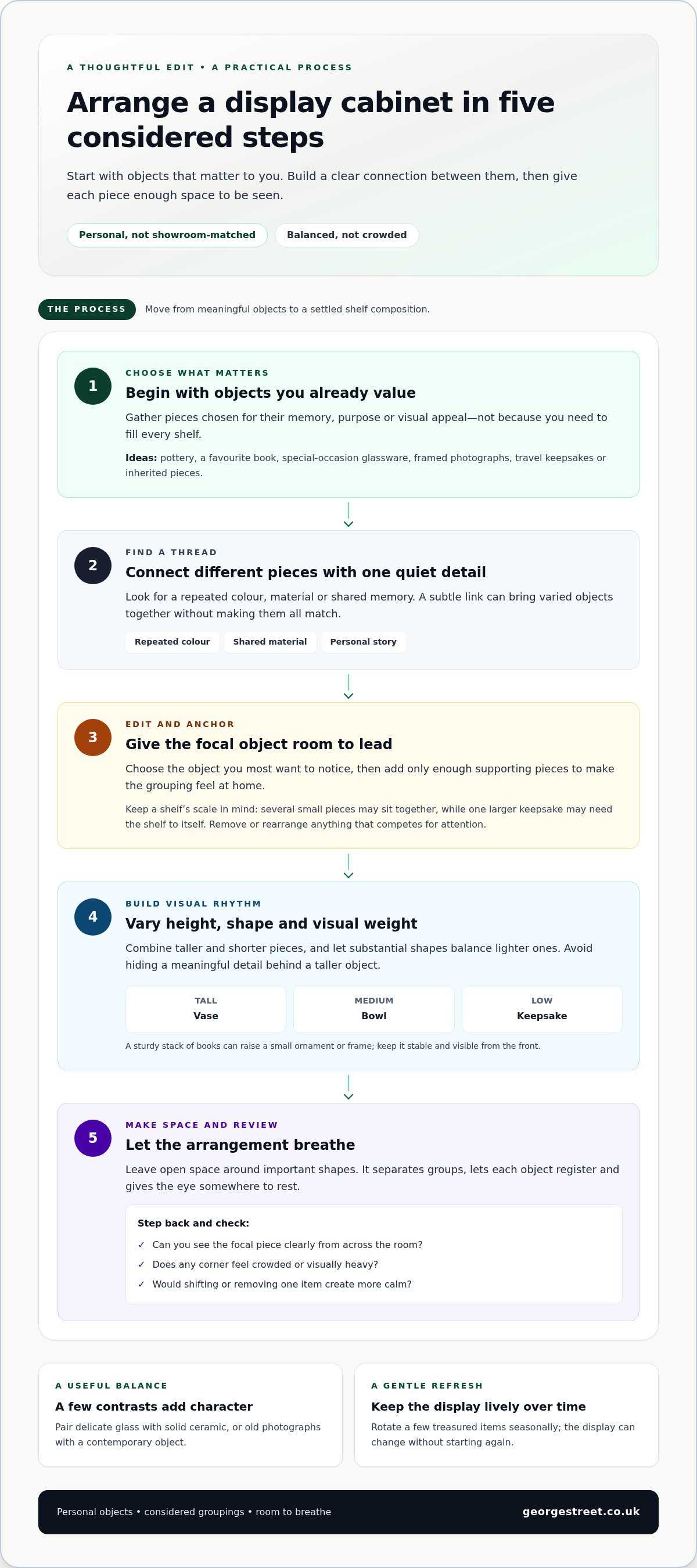
Arrange your display cabinet in five practical steps
A clear process makes arranging feel less like trial and error. Before deciding what to put in a display cabinet, clear the shelves, choose the pieces you want to keep in view and build each arrangement around a point of focus. Then step back and make small adjustments until the cabinet feels connected as a whole.
- Empty. Take everything out so you can see each shelf clearly. A clear surface makes it easier to compare objects and notice shared shapes, colours or stories.
- Edit. Shortlist the pieces you most want to display. Set aside anything that feels distracting or doesn’t strengthen the collection. You can keep those objects safely elsewhere and bring them back another time.
- Group. Bring related items together in small clusters, such as objects linked by a memory or shared detail. Before placing them, choose one focal object or a small connected group for each shelf.
- Arrange. Place the focal piece first, then position supporting objects around it. Vary their spacing and height, and leave a clear view of the features you want people to notice.
- Review. Look at each shelf, then the cabinet as a whole. Check the arrangement from across the room, where you’ll often see whether the display feels balanced or one area draws too much attention.
Empty, edit, group, arrange and review: these five steps turn a collection of objects into a considered display.
How do you start arranging a display cabinet?
Begin with an uncluttered view of the shelves and a shortlist nearby, rather than placing every possible object as you go. Choose the focal point first, then add supporting pieces in small groups. Once each shelf has a clear arrangement, take in the cabinet as one composition. This helps you spot shelves that feel too similar or disconnected from the rest.
If a shelf looks crowded, remove one piece or shift it to another level; you may not need to start again. An uneven arrangement might simply need a larger object moved towards the quieter side, while a disconnected shelf may benefit from a subtle link to the others, such as a repeated colour or material. Make one change at a time, then pause to see its effect.
How can you tell when a shelf looks finished?
A shelf is ready when its objects remain visible, it has a clear point of interest and nothing feels present only to fill space. Notice whether two pieces perform the same visual role without adding a new detail or story. If they do, try removing one. Check the result from a distance, then make a small adjustment rather than dismantling an arrangement that already feels close.
If you’d like to consider how furniture looks in a room before settling on your layout, visit the showroom to explore furniture in person.
Keep your display cabinet fresh with simple seasonal edits
A display can change with the life of your home without losing its familiar character. Rotate a few objects rather than replacing the whole collection: bring a photograph forward, swap the position of two keepsakes or give a newly meaningful piece a place for a while. Small edits can make the cabinet feel renewed while preserving the stories that matter.
Seasonal changes needn’t involve buying anything. In spring, you might bring forward a lighter-coloured object already in the house; later in the year, a piece with a warmer tone or natural texture could echo the season outside. These are gentle cues, not rules. Keep the arrangement that feels right to you, and let the cabinet evolve at its own pace.
How often should you refresh the objects on display?
There’s no schedule to follow. Refresh the display when it starts to feel stale, when a new memory deserves a place or simply when you’d enjoy seeing familiar pieces in a different arrangement. Keep a small rotation of favourite objects nearby, so switching a few items is easy. Returning a piece later can make it feel newly noticed.
As you rearrange, take the opportunity to dust the shelves and objects with care. Lift pieces individually rather than sliding them across a shelf, and handle keepsakes gently, especially when repositioning them in a group. A clear surface makes it easier to see how the arrangement is working. Follow any care guidance that came with individual objects.
Where can you find furniture inspiration in person?
A display cabinet belongs to the room around it, so changes to nearby furniture, colours and textures can inspire a fresh edit. Notice how your existing furnishings shape the room’s mood, then let those details guide any changes to the cabinet.
If seeing furniture in person would help you picture the room as a whole, George Street Furnishers’ showroom offers space to explore, with experienced team members on hand for relaxed, no-pressure advice. You can plan a visit to the showroom and consider how different furnishings might shape the feeling of your space.
Then return to your cabinet with fresh eyes. Keep the objects that still feel meaningful, move a few that deserve a new place in the story and leave the rest of the collection ready for another time. A personal display doesn’t need constant attention; it simply needs room to change when you’re ready.
Let your display grow with your home
Your cabinet doesn’t need to feel finished forever. Let it change as new memories find their way into your home or as you notice a different object deserves the light. The answer to what to put in a display cabinet can shift over time, and that’s part of its charm: each thoughtful edit keeps the display personal rather than fixed.
As you consider the space around it, pay attention to the furniture that gives the room its character. George Street Furnishers is a family-run business spanning three generations, with over 75 years of experience helping people make considered choices for their homes. If you’d like to explore furniture in person and talk through ideas in a relaxed, pressure-free setting, the showroom offers a welcoming place to begin.
Explore furniture for your home, and take inspiration back to the pieces and stories you already treasure. Your display can evolve at its own pace, one meaningful object at a time.
Frequently Asked Questions
Is it better to display matching objects or a mixture?
Neither approach is essential. Matching pieces can create a calm, collected look, while varied objects often feel more personal. For example, a group of similar ceramics might feel more relaxed with one contrasting keepsake nearby. Connect different pieces through a repeated colour, material, memory or theme, then choose an arrangement that suits both your room and collection. Remove anything that distracts from the overall impression.
Can I put books in a display cabinet?
Yes, books can add colour, height and a personal touch. Choose a small selection connected to the other objects, such as a travel book alongside a souvenir from that journey. A book can also act as a base for a smaller object, provided it sits securely and the cover or spine remains visible. Treat the shelf as a display, not a place to store every book you own.
How do I make a display cabinet look less cluttered?
Start by taking out anything that doesn’t contribute to the display’s story, then give the remaining objects room around them. Choose one clear point of interest for each shelf and check that smaller details aren’t hidden. View the cabinet from the room’s usual entrance or seating area. If the arrangement still feels busy, remove another item and pause before adding anything back.
What should I put in a narrow display cabinet?
Choose objects that fit comfortably on the shelves and can be seen clearly from the front. A few smaller keepsakes, photographs or ceramics may suit a narrow cabinet better than a cluster of large pieces. Arrange objects so their shapes remain distinct, and avoid placing items behind one another where they disappear from view. A small, carefully chosen grouping can give a slim space character without making it feel crowded.
Are family photographs suitable for a display cabinet?
Yes, family photographs can bring warmth and a sense of continuity to a cabinet. Choose images connected to nearby keepsakes, such as a portrait beside an object linked to the same person or occasion. Consider whether the photograph can be seen clearly from where people usually sit or pass by. A few well-positioned frames can make the display feel intimate without turning every shelf into a gallery.
How can I style a display cabinet without buying anything new?
Gather possible pieces from different rooms, then try combinations before deciding what to display. A small object from a bookshelf might pair with a keepsake from a drawer, even if they weren’t collected together. You can also swap items between shelves or borrow a familiar piece from another part of the home. Rearranging what you already own can reveal unexpected connections and give the cabinet a fresh feel.
Should every shelf in a display cabinet be filled?
No, every shelf doesn’t need to be full. Open areas let individual objects stand out and can make the cabinet feel calmer. Think about how the shelves relate to one another rather than aiming for equal numbers of items on each level. One shelf might hold a small group, while another has a single piece with room around it. Let the objects guide the arrangement, not the urge to fill every space.