


Oak is the more practical choice for a modern dining table, while walnut brings a deeper, more dramatic finish. In the oak vs walnut furniture decision, oak’s greater hardness gives it an edge against everyday dents and scratches, but walnut’s chocolate-brown tones create a warmth that lighter oak can’t quite match. The best choice depends on the feel you want in the room as much as how the table will be used.
Both woods have lasting character, distinctive grain and the potential to become part of your home for years to come. It’s easy to prefer one at first glance, but details such as colour, care and placement can make the choice clearer.
This guide compares oak and walnut for dining tables, durability and interior styles, then considers their use in furniture, flooring and cabinetry. Use the practical tips to choose the wood that best suits your space.
Key Takeaways
- Match your table wood to the room’s light, the atmosphere you want and the everyday demands of your household.
- Bring oak and walnut together with a considered colour balance, using rugs or soft furnishings to connect contrasting pieces.
- Choose oak when moisture resistance is a priority, particularly for kitchen settings; consider how each wood’s finish will suit the space.
- Protect either wood with gentle, consistent care, and use the manufacturer’s maintenance guidance to preserve its finish.
Is Walnut Or Oak Better For A Modern Wood Dining Table?
For a modern dining table, oak suits practical, everyday settings, while walnut makes a more dramatic statement. Choosing oak vs walnut furniture starts with the room’s light, the table’s role and the atmosphere you want. Oak’s lighter tone can help a compact dining area feel open; walnut adds visual depth. Consider whether the table will be used for family meals, formal occasions or both.
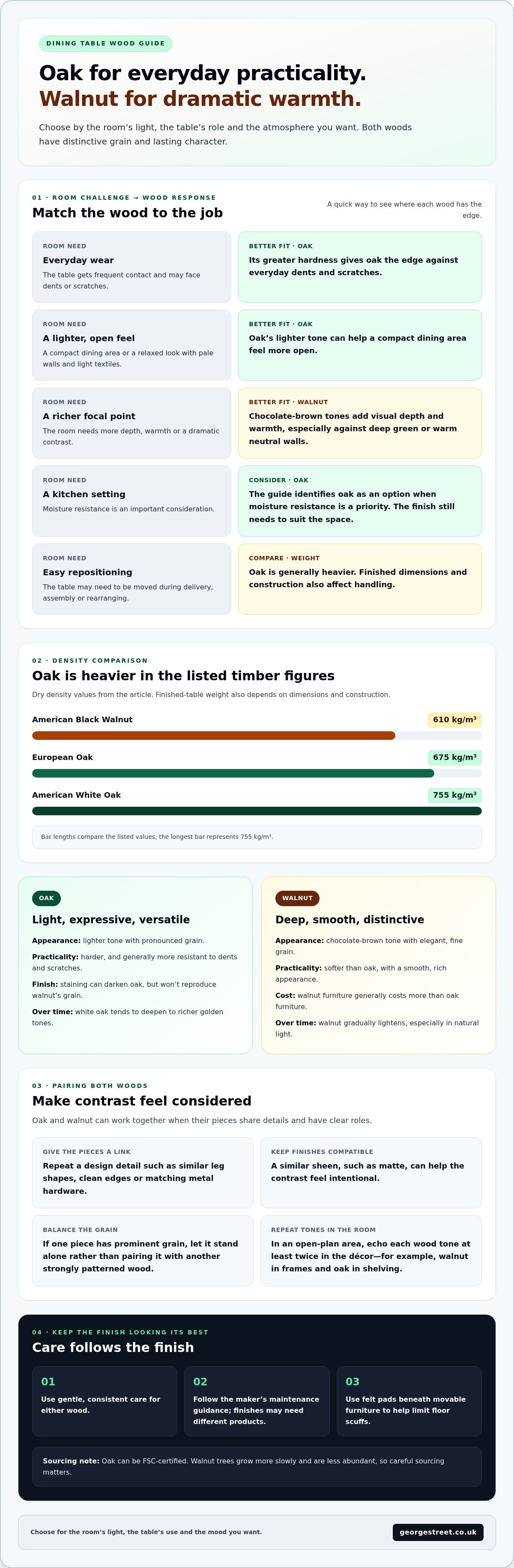
Weight can affect delivery and assembly. American Black Walnut has a dry density of 610 kg/m³, compared with European Oak at 675 kg/m³ and American White Oak at 755 kg/m³. Oak is generally heavier, although the finished table’s dimensions and construction also affect handling. Black walnut has attractive, fine, straight-grained dark wood, according to the UK Government.
| Wood | Appearance | Useful distinction | Consideration |
|---|---|---|---|
| Oak | Lighter tone, pronounced grain | Versatile for different dining settings | Heavier; staining won’t change its grain |
| Walnut | Chocolate-brown tone, elegant grain | Distinctive colour and smooth finish | Softer and generally more costly |
Solid oak has an expressive grain and versatile look, though its weight may matter when positioning a table. Solid walnut has a rich, smooth appearance, but is softer and generally costs more. Staining can darken oak, but won’t reproduce walnut’s grain. These differences make the oak vs walnut furniture choice about more than colour.
In the UK, walnut furniture generally costs more than oak furniture, reflecting timber costs and walnut’s traditional association with premium craftsmanship. The difference depends on the timber and finished piece. Compare construction, finish and dimensions as well as appearance, rather than judging a table by its finish alone.
Both woods change colour with age. Walnut gradually lightens, especially in natural light, while white oak tends to deepen to richer golden tones. Oak can also develop a deeper tone and more character. Consider how the table’s position and changing daylight may affect its appearance over time.
For an open-plan dining area, repeat each wood tone at least twice in the décor. Walnut on a table might be echoed in frames, with oak appearing in shelving or a sideboard. If you’re arranging dining outdoors, consider how shelter fits around the table and circulation space, comparing small aluminium pergolas with medium aluminium pergolas.
Oak can be certified by the Forest Stewardship Council (FSC). Walnut trees grow more slowly and are less abundant, so careful sourcing matters. Choose based on the grain you prefer, the table’s setting and the atmosphere you want to create.
Can I use oak and walnut furniture together?
Yes. Oak and walnut can work together when their pieces share a design detail, such as similar leg shapes, clean edges or matching metal hardware. That connection brings visual harmony without making the woods look identical. For example, a simple oak console and walnut dining chair can feel related if both have slim, squared frames.
Oak generally resists dents and scratches better because it’s harder; walnut is slightly softer. Both are hardwoods suited to indoor furniture, but the difference can help you assign roles. Use oak for a surface that gets frequent contact, such as a desk, and walnut for a cabinet or occasional chair where its colour can take focus.
Plan each piece by function before arranging it. A large table and compact cabinet occupy different visual areas, so contrasting woods can feel deliberate rather than competing. In a dining room, keep the table’s outline clear and choose a walnut sideboard with a simple profile. The table remains the room’s working centre, while the darker piece adds depth.
Finish is another way to connect pieces. Oak and walnut can sit comfortably together when they have a similar sheen, such as matte finishes. A high-gloss surface beside a raw-looking finish may make the contrast feel less intentional. Compare samples in the room’s usual lighting, then check them against the furniture’s handles, legs and other visible details.
Grain direction also affects how pieces relate. A walnut cabinet with strong horizontal lines may clash with a heavily figured oak table. Look for calmer grain or repeating lines in the furniture’s design. If one piece has prominent grain, let it stand alone rather than placing another strongly patterned wood beside it.
Consider how furniture will be used and moved. Oak’s greater weight can make a large piece harder to reposition, while a walnut accent chair may be easier to move around a dining space. Avoid placing chair backs where they repeatedly hit a table edge, and use felt pads beneath movable furniture to limit floor scuffs.
Both woods need appropriate care, though their finishes may require different products. Follow the maker’s maintenance instructions instead of using one polish on every surface. A separate cloth for each finish can prevent residue transferring between pieces. Oak and walnut bring contrast and variety; shared shapes, compatible sheen and thoughtful placement make the pairing feel considered.
Oak and walnut in different interior styles
Start with the mood created by your walls, flooring and textiles. In a room with pale walls, linen curtains and a light rug, oak tables can reinforce an airy, relaxed character. Walnut creates a more sophisticated focal point against deep green paint or a warm neutral backdrop. Consider grain and colour together: pronounced oak grain feels expressive, while walnut’s finer grain brings quieter richness. Choose the wood that supports the room’s character rather than competing with it.
Walnut has a natural place in mid-century interiors. A sideboard with tapered legs, a low profile and simple brass details can anchor the look. Oak suits a lighter interpretation, such as a dining table with clean lines and understated legs. In industrial rooms, combine an oak tabletop with black metal frames, exposed brick and practical lighting. Walnut also works beside dark steel, but makes the palette feel more intimate.
Scandinavian rooms often favour light, calm surfaces, making oak a natural fit for a dining table, shelving or simple bed frame. Pair its pale colour with white walls, wool throws and restrained accessories. Japandi interiors share an interest in quiet forms, but can welcome walnut as a deliberate accent. A walnut bench beside oak cabinetry adds depth without disrupting uncluttered lines. In either style, choose furniture with visible, natural materials over ornate detailing.
Oak and walnut can create contrast within one interior style. In a mid-century lounge, for example, use a walnut coffee table and oak shelving, then connect them through similar shapes or hardware. In a Japandi dining area, an oak table can sit near a walnut cabinet if surrounding colours remain restrained. Make the contrast purposeful: compare scale, finish and grain before arranging the pieces. Avoid adding several unrelated wood colours, which can make a considered scheme feel accidental.
Existing furniture is a useful starting point. If your floor is oak, a walnut dining table can stand apart through its darker colour, while a pale rug creates a visual pause. If a cabinet is walnut, oak chairs can bring lighter contrast around the table. Look at the room in daylight and under evening lamps, as each can alter the appearance of wood tones. Place samples beside flooring, upholstery and paint to see whether the combination feels cohesive.
Style isn’t the only consideration. In a family dining room, choose a finish and arrangement suited to regular use, and protect table surfaces where dishes or objects could cause scratches. In a formal sitting room, walnut’s deep tone may work as a focal point. Oak’s adaptable appearance can suit connected spaces, such as an open-plan kitchen and dining area. Let each room’s light, materials and purpose guide your choice.
Oak furniture's durability and everyday practicality
Oak suits daily use because its hardwood structure resists wear and needs minimal upkeep. In a busy British home, an oak dining table can serve meals, homework and evening gatherings for decades with reasonable care. Oak furniture can last for generations when maintained properly. Its practical strength also works visually: a contemporary oak sideboard can balance softer furnishings without demanding constant attention.
In homes with changing humidity, oak generally tolerates fluctuations slightly better than walnut. White oak’s closed grain structure also offers better resistance to moisture absorption. This makes oak worth considering for rooms where humidity varies, such as a kitchen near cooking activity. It doesn’t remove the need for sensible care: follow the maker’s maintenance guidance and wipe up spills promptly.
Walnut is durable for indoor furniture, but softer than oak. That difference can matter for pieces exposed to repeated knocks, such as a dining table or hallway console. Oak generally resists dents and scratches better, while walnut’s smooth, chocolate-brown appearance adds rich contrast to a room. Choose according to the furniture’s daily role, not appearance alone.
Outdoor exposure calls for particular care. Oak species contain resins that help protect wood outdoors from rainfall, insect damage and fungal damage. Walnut timber can lose its darker appearance fairly quickly outdoors. For garden settings, consider how often a piece will face rain and sunlight, and choose furniture intended for outdoor living. Explore garden furniture when planning a practical outdoor space.
Protect indoor oak and walnut with a simple routine. Dust regularly with a soft cloth, use coasters and placemats beneath drinks and dishes, and wipe up spills promptly. Avoid harsh chemicals, which can damage the finish. For walnut, regular cleaning and occasional refinishing can help maintain its lustre. Follow the manufacturer’s guidance, as finishes can need different care.
Placement matters, too. Keep wooden furniture out of prolonged strong, direct sunlight, which can fade walnut. Avoid positioning a solid-wood cabinet directly beside a heat source, where sudden environmental changes can stress the material. In a family living room, place a rug beneath a coffee table to reduce abrasion from everyday movement. These small steps help preserve the surface and the piece’s character.
Choose oak for dependable everyday use, especially where humidity fluctuates or knocks are likely. Choose walnut for indoor pieces where its darker finish is central to the room’s character. Both woods reward consistent care and can become lasting parts of a home when their placement and maintenance suit the material.
Furniture, flooring and cabinetry uses
Oak and walnut suit different roles throughout a home. An oak vs walnut furniture decision can shape a room’s light, texture and balance, while flooring and cabinetry extend that choice across larger surfaces. Oak’s lighter tone and visible grain can make a kitchen feel open. Walnut brings deeper colour and warmth to a cabinet, shelving unit or statement desk.
For kitchen cabinetry, oak is generally the more practical option because of its moisture resistance and lighter tones. It can cover broad cupboard fronts without making the space feel visually heavy. Walnut can create a striking feature, such as an island or open shelves, especially against pale walls. Using both materials adds contrast, but keep their roles clear.
Flooring sets the visual foundation for a room. Oak’s lighter appearance works with varied furniture styles and can help smaller spaces feel brighter. Walnut flooring creates a richer, more intimate setting, particularly with neutral walls and restrained furnishings. When comparing oak and walnut with flooring, decide whether the tones should blend or create deliberate contrast.
Daily use matters as much as appearance. Oak is a durable hardwood, and its moisture resistance makes it worth considering for kitchens. Walnut is also a hardwood, with a deeper colour that can make dust less visible than on pale surfaces. With either material, clean spills promptly, avoid harsh chemicals and follow the manufacturer’s maintenance guidance.
Cabinetry choices depend on how much visual weight the room can carry. Oak can suit a full kitchen of cupboards, while walnut may work best as a feature in a study alcove or drinks cabinet. If both appear together, echo each tone in nearby furniture or details. Avoid introducing several competing wood patterns, which can make a carefully planned scheme feel unsettled.
Choose the dominant material first, then decide where the second wood adds value. For example, combine oak flooring with walnut cabinetry, or set oak furniture against walnut flooring. Compare samples beside paint, flooring and existing materials in daylight and evening light. This shows how the tones work across connected spaces, not just in isolation. For more ideas as you plan, explore home furnishing advice.
The practical distinction is clear: oak generally suits kitchens, lighter rooms and durable everyday surfaces; walnut adds warmth and depth to flooring or cabinetry used as a focal point. To plan your room’s foundation, explore carpets and flooring alongside your chosen wood tones.
George Street Furnishers: Sofas
George Street Furnishers can help you bring a considered furniture choice into the wider story of your home. Once you’ve settled on oak or walnut for key pieces, think about how a sofa’s colour and texture will complement the wood. Neutral fabric can sit comfortably beside either tone, while a deeper shade can echo walnut’s warmth or contrast with oak.
Turn to George Street Furnishers when choosing furniture to complete a room, or when a sofa needs to work alongside existing tables and cabinetry. The range also includes beds and mattresses, plus aluminium pergolas for outdoor living, so you can consider different parts of the home in one place.
For a closer look at furniture and sofas, explore George Street Furnishers online.
Make your next choice feel at home
Let your oak-versus-walnut furniture choice be a starting point for shaping a home that feels distinctly yours. Consider how new pieces will sit beside the colours, textures and treasured objects already in your rooms. Not every surface needs to match: a thoughtful decision can give each space its own character while keeping the whole home connected.
As you plan what comes next, George Street Furnishers offers furniture for living spaces, alongside sofas, beds and mattresses, and aluminium pergolas for outdoor settings. These choices can help you carry a consistent sense of comfort and style from one part of home life to another. Take the next step at your own pace: contact George Street Furnishers to explore the possibilities. Your home’s next chapter can begin with one considered choice.
Frequently Asked Questions
Can you stain oak to look like walnut?
Yes, oak can be stained a darker brown to evoke walnut, but the result won’t be identical. Oak’s more pronounced grain remains visible beneath the stain, while walnut has its own finer, distinctive pattern. A stained oak cabinet, for example, can echo walnut’s colour while still reading clearly as oak. Test the finish on a sample first, since the wood’s natural tone affects the final appearance.
Is oak colour lighter than walnut?
Generally, yes. Oak usually has a light-to-medium natural tone, while walnut is known for deeper brown shades. This contrast can guide a room decision: pale oak furniture can sit lightly against white walls, while a walnut cabinet makes a stronger feature beside cream or soft-grey paint. Individual boards and finishes vary, so compare samples beside your flooring and wall colour before choosing.
Is oak or walnut stronger?
Oak is generally harder than walnut, so it has an advantage where furniture may face knocks or frequent use. On the Janka hardness scale, oak is listed at 1290 Janka, while black walnut is approximately 1,010 Janka. For example, oak can be a sensible choice for a heavily used desk. Strength also depends on the piece’s construction, so examine joints and overall design alongside the timber.
Is walnut more durable than oak?
Not generally when it comes to dent resistance: oak is slightly harder, giving it an edge against everyday impacts. Walnut remains a durable hardwood for indoor furniture, and its darker finish can make minor marks less conspicuous. Use coasters on a walnut bedside table and wipe up spills promptly to protect the surface. The best choice depends on where the piece will stand and how it will be used.
Is walnut softer than oak?
Yes. Walnut is softer than oak, so it may be more vulnerable to dents from heavy objects or sharp impacts. That doesn’t make it unsuitable for everyday furniture. A walnut bookcase in a quieter living area faces different demands from a dining table used for family meals. Consider the piece’s purpose, protect its surface and follow the manufacturer’s care guidance to preserve its finish.
Is oak furniture too casual for formal rooms?
No. Oak can look formal when its shape, finish and surroundings work together. A refined oak dining table paired with tailored chairs, considered lighting and elegant tableware can suit a formal dining room. Pronounced grain gives it a more natural character, while a restrained finish and clean-lined design create a composed presence. Match the oak’s tone to the room’s overall palette.
What makes oak a popular choice?
Oak’s recognisable grain and versatile natural colour make it adaptable across furniture and interiors. Its availability in the UK and Europe also helps make it more accessible than less abundant woods. An oak dining table, for example, can work with contemporary and traditional furnishings. Oak can also be certified by the Forest Stewardship Council, a sourcing consideration for buyers who value certification.
What’s more expensive, walnut or oak?
Walnut furniture generally costs more than oak furniture because walnut timber is less abundant and grows more slowly. A piece’s final price also reflects its design, construction and finish, so compare like with like. For example, assess tables with similar dimensions and build quality before judging the difference by timber alone. Walnut’s traditional association with premium craftsmanship also contributes to its higher typical cost.